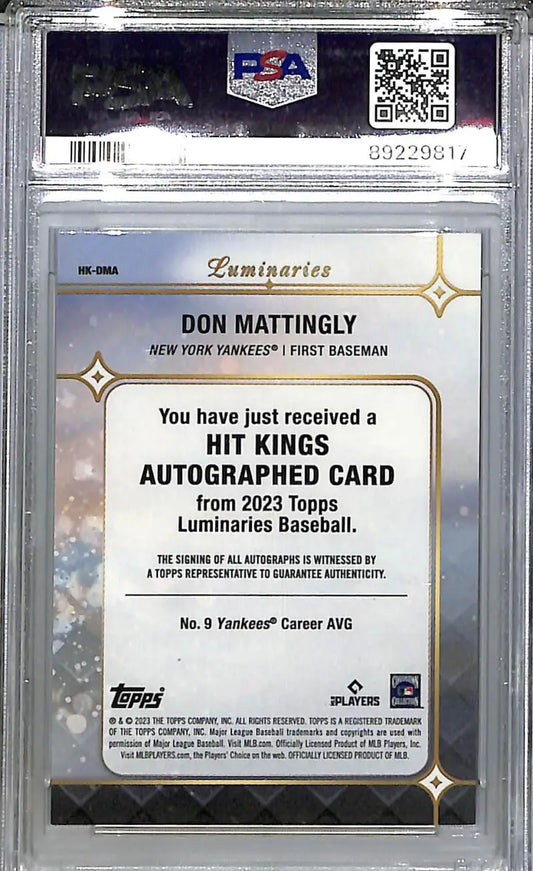
The Origin & Lore: Graded Cards have become a significant sub-collection within the world of sports and trading cards. The practice of grading cards began in the 1970s, largely popularized by professional grading services like PSA and BGS. These companies introduced a standardized scoring system to assess the condition of cards, which sparked a new era of collecting that placed a premium on card condition and authenticity. The movement has evolved into a thriving market where enthusiasts curate collections around specific players, teams, or even sets based on the graded quality, hence growing the demand for cards that exhibit superior craftsmanship and rarity. This evolution in collecting not only highlights the culture of nostalgia but also reflects the heightened competition among collectors to secure high-graded cards from various eras.
Visuals & Design: Visually, graded cards offer a spectrum of aesthetics that appeal to collectors. Many graded cards display vibrant colors, intricate designs, and detailed imagery that capture the essence of the athletes they portray. Borders may range from classic white or black designs to innovative holographic or metallic finishes that shimmer under light, thanks to advancements like refractor technology. Each card’s artwork is touched with sensory properties that bring the depicted action to life, from dynamic poses of players to iconic moments frozen in time. Collectors often admire the consistent grading slab which not only protects the cards but also accentuates their visual appeal.
Key Features & Mechanics: The graded card market involves an array of noteworthy features that amplify its allure. For instance, rookie cards often serve as the cornerstone of many collections due to their potential for value appreciation. Game mechanics and trading strategies also vary considerably within collectible card games (TCGs), where certain cards hold more weight due to their playability and rarity in competitive settings. Specific subsets within graded cards provide depth and allow collectors to hone in on desired themes or eras, creating extensive narrations around historical blocks of cards.
The Chase Factor: The thrill of collecting graded cards is heightened by the chase for rare variants and parallel colors, which are often short-printed and highly sought after. Notable highlights include cards that are numerically limited, such as those labeled '1 of 100' or even unique '1 of 1' editions that carry unmatched exclusivity. Limited edition inserts can create a frenzy as collectors hunt down these elusive treasures, significantly driving value in the market.
Collector's Legacy: Graded cards occupy a unique space in the collectibles market, embodying both nostalgic sentiments and modern investing strategies. As the landscape of card collecting evolves, the enduring appeal of overall quality, authenticity, and historical context ensures that graded cards will maintain their status as valuable artifacts. Their legacy transcends generations, securing a vital role within the collectables community as both a competitive staple and a poignant reminder of sports history.
```
These answers were generated using TradingCardsMarketplace.com AI, which leverages advanced technology that may sometimes provide incomplete or imprecise details. This content is for educational purposes only and does not constitute financial, investment, or purchasing advice. We recommend carefully reviewing all product descriptions and seller listings before making any purchase.