

The world of football card collecting has evolved dramatically over the past decade, with select football cards emerging as one of the most sought-after products in the hobby. These premium collectibles offer collectors a unique blend of design excellence, player variety, and investment potential that sets them apart from standard releases. Whether you're a seasoned collector or just starting your journey, understanding the nuances of these cards can help you build a collection that brings both personal satisfaction and financial value.
Understanding the Select Football Cards Brand
Select has established itself as a premier brand within the football card industry, known for its distinctive chromium technology and multi-tier parallel system. The brand appeals to collectors who appreciate high-quality card stock, vibrant designs, and the thrill of chasing rare variations.
Brand History and Evolution
The Select brand has undergone significant transformation since its inception. According to the comprehensive history of Select Footy Cards, the brand has roots in Australian football before expanding into the American football market. This heritage has influenced the brand's commitment to quality and collector-focused design principles.
The evolution of select football cards reflects broader trends in the hobby:
- Introduction of chromium card stock for enhanced durability and visual appeal
- Development of complex parallel systems with multiple color variations
- Integration of autograph and memorabilia cards in base products
- Expansion of rookie card offerings to capture emerging talent
Modern Select releases incorporate advanced printing techniques that create prismatic effects and eye-catching finishes. The brand's signature look has become instantly recognizable to collectors worldwide.
Product Line Structure
Select football cards are released annually with carefully structured product lines. The 2023 Select Football checklist provides insight into how modern releases are organized, typically featuring these components:
| Product Tier | Cards Per Pack | Price Range | Target Collector |
|---|---|---|---|
| Hobby Box | 12 cards | $120-$150 | Serious collectors |
| Blaster Box | 7 packs | $25-$35 | Casual enthusiasts |
| Hanger Box | 30 cards | $30-$40 | Value seekers |
| Mega Box | 10 packs | $50-$70 | Retail collectors |
Each product configuration offers different odds for pulling rare parallels, autographs, and premium inserts. Understanding these distinctions helps collectors make informed purchasing decisions aligned with their budget and collection goals.
Key Card Types and Variations
Select football cards feature an intricate hierarchy of card types that creates excitement and value across multiple collector segments. The base set serves as the foundation, but parallel variations and special inserts drive much of the product's appeal.
Base Cards and Parallel Systems
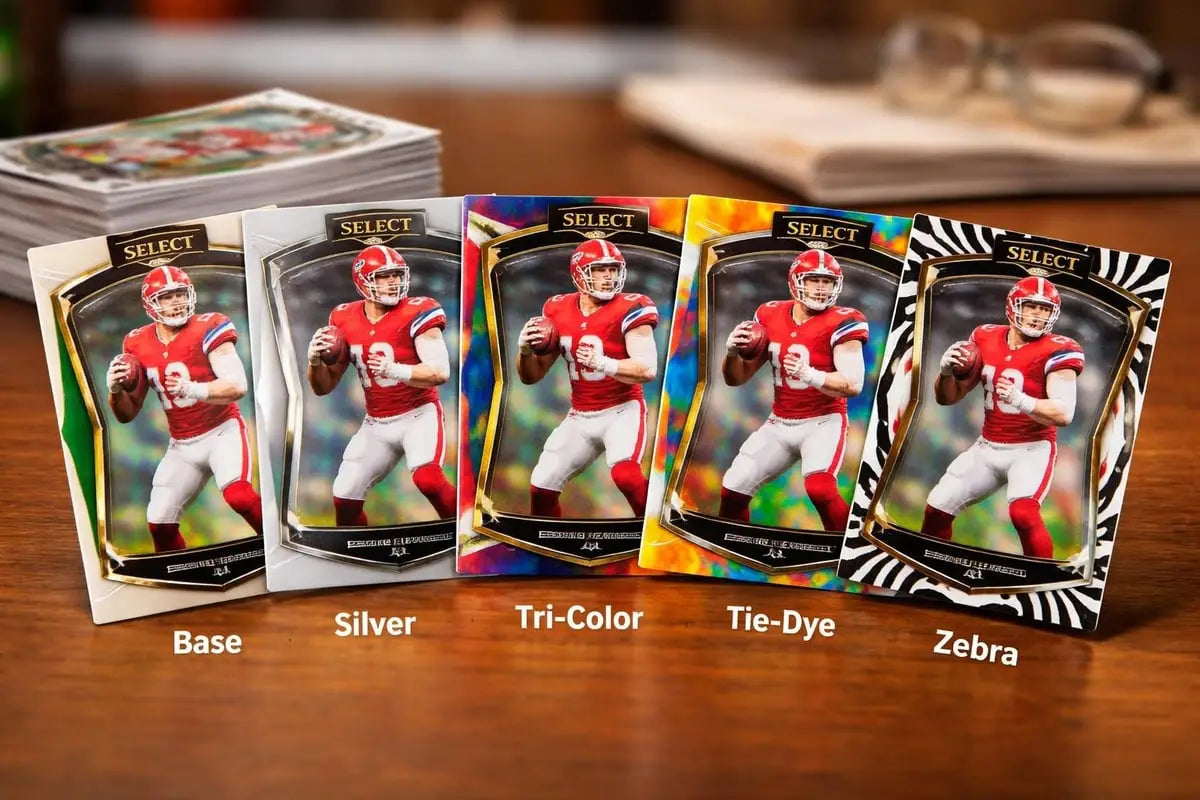
The standard base card design serves as the template for an extensive parallel system. These variations differ in color schemes, patterns, and scarcity levels:
Common Parallels:
- Silver Prizm (most common parallel)
- Tri-Color variations
- Red, White, and Blue combinations
- Team-specific color matches
Rare Parallels:
- Tie-Dye patterns with limited production
- Zebra striping for premium rarity
- Neon Green variations
- Gold and Black finite numbering
The numbering system on rare parallels indicates production quantities, with lower numbers commanding higher prices. A card numbered to 10 copies will naturally be more valuable than one numbered to 99.
Rookie Cards and Prospect Value
Rookie cards within select football cards releases represent significant investment opportunities. Each year's draft class brings fresh talent, and identifying future stars early can yield substantial returns.
The 2026 rookie class features several highly anticipated players across all football teams, with quarterbacks and skill position players typically commanding premium prices. Historical data from the 2022 Select Football and 2021 Select Football releases demonstrates how rookie card values fluctuate based on player performance and market sentiment.
Autograph and Memorabilia Cards
Premium hits elevate select football cards beyond basic collecting into serious investment territory. Autographed cards feature on-card signatures or authenticated sticker autographs, each with different appeal to collectors.
Memorabilia cards incorporate game-used materials:
- Jersey swatches from actual uniforms
- Football leather from game balls
- Patch cards featuring team logos or NFL shields
- Cleat pieces and glove materials
These special cards are serial numbered and appear at specified odds within products. Hobby boxes typically offer better odds for premium hits compared to retail configurations.
Building a Strategic Collection
Successful collecting requires more than simply buying packs and hoping for valuable pulls. Strategic collectors develop focused approaches that align with their personal interests and financial objectives.
Collection Focus Areas
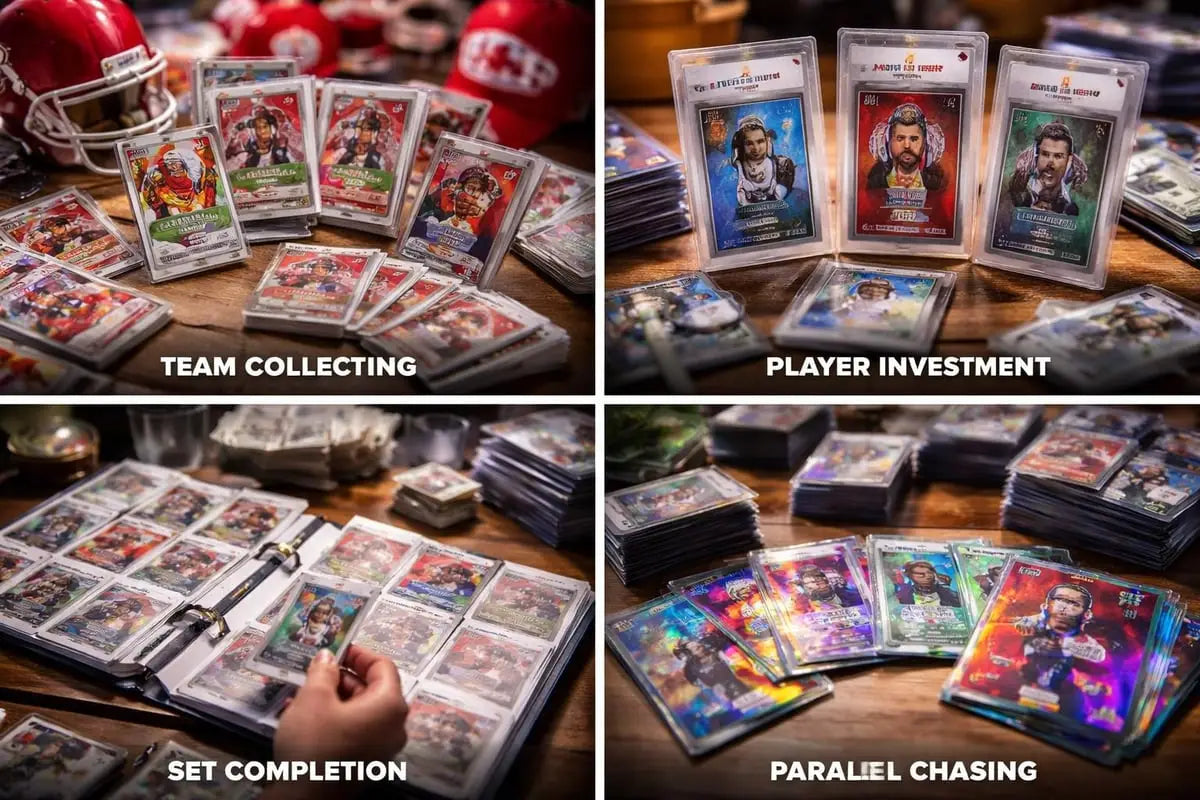
Determining your collecting focus creates direction and helps manage spending. Popular strategies include:
Team Collecting: Focus on all cards from your favorite franchise. This approach connects emotional investment with financial commitment, making the hobby more personally meaningful.
Player Collecting: Target specific athletes throughout their careers. Superstar players maintain value, while emerging talents offer high-risk, high-reward opportunities.
Set Completion: Pursue complete base sets or specific parallel levels. This systematic approach provides clear goals and measurable progress.
Investment Collecting: Prioritize cards with strong appreciation potential based on player trajectory, scarcity, and market trends.
Many collectors combine multiple approaches, maintaining a core collection while opportunistically pursuing valuable singles. Similar to strategies discussed in our hobby box of baseball cards guide, diversification across different focus areas can balance risk and reward.
Budget Management and Purchase Timing
Financial discipline separates successful collectors from those who overspend without building meaningful value. Establishing a monthly collecting budget prevents impulsive purchases and ensures long-term sustainability.
| Purchase Type | Timing Strategy | Average Savings |
|---|---|---|
| Sealed Product | Pre-season (June-August) | 15-25% |
| Singles (Current) | Mid-season dips | 20-35% |
| Singles (Rookies) | Post-draft uncertainty | 30-50% |
| Graded Cards | Off-season months | 10-20% |
Product prices typically peak at release and gradually decline as supply increases. However, select football cards can experience secondary spikes when key rookies perform well early in the season. Monitoring market conditions and being patient with purchases maximizes collection value per dollar spent.
Authentication and Grading Considerations
Professional grading adds credibility and market value to premium cards. Third-party grading companies evaluate condition using standardized criteria, encapsulating cards in protective holders with assigned grades.
When to Grade:
- High-value rookie cards (estimated raw value $100+)
- Rare parallels with strong centering
- Autograph cards from elite players
- Vintage cards requiring authentication
When to Keep Raw:
- Common base cards with minimal value
- Cards with obvious condition issues
- Personal collection items not for sale
- Cards where grading fees exceed potential value increase
Grading costs typically range from $20 to $100+ per card depending on service level and turnaround time. Calculate the potential grade and resulting market value before submitting cards to ensure economic viability.
Market Analysis and Investment Trends
The secondary market for select football cards operates through multiple channels, each with distinct characteristics affecting pricing and availability. Understanding market dynamics helps collectors make informed buying and selling decisions.
Primary Market Channels
Collectors acquire select football cards through several primary sources:
Retail Stores: Major retailers stock blaster boxes, hanger packs, and mega boxes at suggested retail prices. Availability varies by location and often sells out quickly during peak seasons.
Hobby Shops: Local card shops offer hobby boxes with better hit odds plus expertise and community atmosphere. Building relationships with shop owners can provide access to allocated products and market insights.
Online Marketplaces: E-commerce platforms like TradingCardsMarketplace provide broad selection, competitive pricing, and convenient purchasing. Online platforms often feature detailed product descriptions and customer reviews that aid decision-making.
Secondary Market Dynamics
Once opened, individual cards enter the secondary market where values fluctuate based on numerous factors:
- Player performance and statistics
- Team success and playoff appearances
- Injury news and career developments
- Population reports from grading companies
- Overall hobby trends and collector demand
Short-term volatility is common, especially with rookie cards during players' first seasons. Patient collectors who can weather temporary downturns often realize better long-term returns than those who panic sell during market corrections.
The Select Footy Card price guide demonstrates how systematic tracking of sales data reveals pricing patterns. Monitoring completed sales rather than current listings provides accurate market values.
Future Outlook for 2026 and Beyond
The football card market continues maturing as a legitimate alternative investment class. Institutional investors and high-net-worth individuals increasingly view premium cards as portfolio diversification tools, bringing additional capital and stability to the market.
Several trends will likely shape select football cards in coming years:
- Enhanced authentication technology embedded in cards to combat counterfeiting
- Digital integration connecting physical cards with NFTs or digital experiences
- Expanded international reach as football grows globally
- Improved quality control reducing error cards and manufacturing defects
- Sustainability initiatives using eco-friendly materials and packaging
These developments suggest continued growth and sophistication within the hobby, benefiting collectors who maintain disciplined, strategic approaches.
Storage, Organization, and Protection
Preserving card condition is essential for maintaining collection value. Even minor damage can significantly reduce market prices, making proper storage and handling critical practices for serious collectors.
Essential Protection Supplies
Building a proper storage system requires minimal investment but provides maximum protection:
Basic Protection:
- Penny sleeves for all cards
- Top loaders for cards valued $5-$100
- Card savers for grading submissions
- Storage boxes with dividers
Premium Protection:
- Magnetic one-touch holders for display pieces
- Screwdown holders for ultra-premium cards
- Climate-controlled storage environment
- UV-protective cases for autographs
Avoid common storage mistakes that damage cards over time. Never use rubber bands, paperclips, or adhesive materials that can mark surfaces. Keep cards away from direct sunlight, high humidity, and temperature extremes.
Organization Systems
Effective organization makes collections accessible and enjoyable. Digital inventory management tools help track holdings, monitor values, and identify collection gaps.
Organization Methods:
- Chronological by release year
- Alphabetical by player name
- By team affiliation
- By card type (base, parallel, autograph)
- By investment tier (personal collection vs. investment holdings)
Many collectors use combination approaches, maintaining a display section for favorite cards while keeping investment pieces in secure storage. Photographing your collection provides insurance documentation and helps with trading or selling discussions.
Trading and Selling Strategies
Eventually, most collectors buy, sell, or trade cards to upgrade holdings or generate returns. Approaching these transactions strategically maximizes value and minimizes friction.
Determining Sale Timing
Market timing significantly impacts sale proceeds. Consider these factors when deciding to sell:
Optimal Selling Conditions:
- Player performing at career-best levels
- Team success driving fan enthusiasm
- Recent grading with exceptional result
- Market experiencing broad upswing
Warning Signs to Wait:
- Recent injury or performance decline
- Off-season doldrums with reduced demand
- Market oversaturation of similar cards
- Pending rule changes affecting hobby
Patience often rewards sellers willing to wait for favorable conditions. However, balancing optimal timing against personal financial needs requires pragmatic decision-making.
Transaction Platforms
Multiple venues exist for selling select football cards, each with advantages and limitations:
| Platform | Fees | Reach | Speed | Best For |
|---|---|---|---|---|
| Online Marketplaces | 10-15% | High | Moderate | High-value singles |
| Social Media Groups | 0-3% | Medium | Fast | Community sales |
| Local Card Shows | Table cost | Low | Fast | Bulk inventory |
| Auction Houses | 15-20% | High | Slow | Premium rarities |
Diversifying across multiple platforms reduces dependence on any single channel while reaching different collector segments. Maintaining positive seller feedback and clear communication builds reputation that facilitates future transactions.
Trading Best Practices
Trading cards with other collectors offers advantages over buying and selling. Trades avoid transaction fees while creating mutually beneficial exchanges based on collection needs rather than market prices.
Successful trading requires:
- Clear communication about card conditions
- Fair value assessments using recent sales data
- Detailed photographs showing any flaws
- Agreed shipping methods with tracking
- Written confirmation of trade terms
Building trading relationships within the collector community provides long-term benefits beyond individual transactions. Many collectors find trading more enjoyable than purely commercial transactions, adding social dimension to the hobby.
For collectors seeking trusted platforms to buy, sell, or trade, exploring the resources available at TradingCardsMarketplace can simplify the process while ensuring secure transactions. Understanding marketplace shipping and insurance options protects valuable cards during transit.
Avoiding Common Pitfalls
Both new and experienced collectors fall victim to preventable mistakes that diminish collection value or drain finances unnecessarily. Learning from others' errors saves money and frustration.
Authentication and Counterfeit Awareness
As select football cards increase in value, counterfeit risks grow. Sophisticated forgeries target high-value autographs and rare parallels, making authentication knowledge essential.
Red Flags:
- Suspiciously low prices on premium cards
- Sellers without established feedback history
- Blurry or limited photographs
- Resistance to providing additional images
- Cards "fresh from pack" without proper holders
Purchase significant cards from reputable dealers with return policies. When in doubt, submit questionable items to professional authentication services before completing transactions.
Overpaying and Hype Cycles
Rookie card values experience dramatic swings based on short-term performance and media hype. Collectors who chase rising prices during peak hype often overpay for cards that subsequently decline.
Avoiding Overvaluation:
- Compare current prices to historical norms
- Analyze underlying player talent beyond recent games
- Consider production quantities relative to demand
- Wait for volatility to settle before buying
- Set maximum purchase prices before bidding
Emotional discipline prevents costly mistakes driven by fear of missing out. The market always provides new opportunities for patient collectors willing to wait for favorable entry points.
Collection Scope Creep
Many collectors start with focused intentions but gradually expand into unfocused accumulation. Buying "good deals" on cards outside your collection focus creates clutter without advancing strategic goals.
Maintaining discipline requires:
- Periodic collection audits removing off-focus cards
- Predetermined criteria for acquisition decisions
- Realistic assessment of available space and budget
- Willingness to sell or trade holdings that no longer fit
Quality consistently outperforms quantity in building meaningful, valuable collections. A focused collection of 100 strategic cards typically appreciates better than 1,000 random acquisitions.
Select football cards represent an exciting intersection of sports fandom, artistic appreciation, and investment opportunity for collectors in 2026. By understanding product structure, market dynamics, and strategic collecting principles, you can build a collection that delivers both personal enjoyment and financial value. TradingCardsMarketplace offers the selection, expertise, and secure transaction environment to support your collecting journey, whether you're pursuing complete sets, chasing rare parallels, or building player collections across your favorite teams.


