NBA basketball cards represent more than simple pieces of cardboard featuring professional athletes. These collectibles embody sports history, investment potential, and the passion of millions of collectors worldwide. Whether you're drawn to vintage sets from the 1980s or modern parallels featuring today's superstars, understanding the landscape of nba basketball cards helps you build a collection that brings both enjoyment and potential financial returns. The market has experienced tremendous growth since 2020, with record-breaking sales and renewed interest from collectors of all ages making this an exciting time to explore the hobby.
The Rich History of NBA Basketball Cards
The story of nba basketball cards spans nearly seven decades, beginning with Topps' first basketball card set in 1957. Topps Basketball history reveals how the company pioneered the modern basketball card format, though production remained inconsistent through the early years. Topps discontinued basketball cards in 1982, creating a significant gap in the market that would shape the hobby's future.
Between 1983 and 1986, Star Company Basketball Cards filled this void as the only licensed NBA card manufacturer. These sets became legendary for featuring Michael Jordan's true rookie cards, making them among the most valuable basketball collectibles ever produced. Star Company cards were distributed differently than traditional packs, sold primarily through team arenas and specialty shops, which contributed to their scarcity today.
The Modern Era Begins
Fleer revolutionized the market in 1986 with the first widely distributed basketball card set in years. The 1986-87 Fleer set contains one of the hobby's most iconic cards: the Michael Jordan rookie that has sold for millions of dollars in gem mint condition. This release sparked renewed interest and established basketball cards as a serious collecting category alongside baseball and football.
Throughout the 1990s, multiple manufacturers entered the market, creating innovation and competition. Upper Deck, SkyBox, and Hoops joined Fleer and Topps in producing sets. This era introduced premium products, autographs, and game-used memorabilia cards that transformed nba basketball cards from simple photographs into diverse collectible categories.
Understanding Different Types of NBA Basketball Cards
Modern collectors encounter numerous types of basketball cards when building their collections. Each category serves different purposes and appeals to various collecting strategies. Knowing these distinctions helps you make informed purchasing decisions and understand market pricing.
Base Cards and Rookie Cards
Base cards form the foundation of every set, featuring standard player photographs without special embellishments. These cards typically carry lower values unless they feature superstar players or important rookie seasons. Rookie cards represent a player's first officially licensed card and consistently command premium prices compared to base veterans.
The rookie card designation holds special significance in basketball collecting. A player's rookie season produces their most valuable standard cards, especially when that player achieves Hall of Fame status or championship success. At TradingCardsMarketplace, collectors regularly seek premiere rookie cards from each year's draft class.
Parallel Cards
Parallel cards duplicate base card designs but feature different colors, patterns, or serial numbering. Manufacturers produce parallels in varying quantities, creating tiered rarity levels:
- Base parallels: Slight color variations, moderate print runs
- Numbered parallels: Serial numbered (e.g., /99, /25), limited quantities
- Color-matched parallels: Team color variants, collector favorites
- One-of-one cards: Single copy exists, ultimate rarity
Serial numbered parallels have transformed modern collecting by introducing verifiable scarcity. A card numbered 15/25 means you own the fifteenth card of only twenty-five produced, creating tangible exclusivity that drives collector demand.
Autograph and Memorabilia Cards
Autograph cards feature authentic player signatures, either on-card or sticker autographs. On-card autographs where players sign directly on the card surface command premium values over sticker versions. Memorabilia cards incorporate game-used items like jersey swatches, court pieces, or basketball fragments embedded in the card design.
| Card Type | Typical Value Range | Collector Appeal | Investment Potential |
|---|---|---|---|
| Base Rookie | $5-$500 | High for stars | Moderate to High |
| Numbered Parallel | $20-$2,000+ | Very High | High |
| Autograph | $50-$5,000+ | Very High | Very High |
| Memorabilia | $30-$1,000+ | Moderate to High | Moderate |
| One-of-One | $500-$100,000+ | Extreme | Extreme |
Factors That Determine NBA Basketball Card Value
Multiple elements influence what collectors pay for nba basketball cards. Understanding these factors helps you identify undervalued opportunities and avoid overpaying for cards that won't appreciate.
Player Performance and Career Trajectory
Current performance dramatically impacts card values. A player averaging thirty points per game during a championship run sees their cards appreciate rapidly. Similarly, rookie of the year campaigns, MVP awards, and playoff success create immediate value spikes. Long-term Hall of Fame potential matters more for sustained appreciation.
Young stars like Victor Wembanyama generated enormous interest in their 2024 rookie cards, demonstrating how anticipation drives prices. Conversely, players who underperform relative to draft position see their card values stagnate or decline. Much like tracking football cards for emerging NFL talent, basketball collectors monitor player development closely.
Card Condition and Grading
Professional grading services like PSA, BGS, and SGC authenticate and grade nba basketball cards on a numerical scale. The difference between a PSA 9 and PSA 10 grade can represent thousands of dollars in value for premium cards. Sports card grading protects your investment by providing third-party verification of condition.
Gem Mint 10 grades require perfect centering, sharp corners, clean surfaces, and flawless edges. Even minor imperfections drop cards to lower grades. Raw ungraded cards always carry uncertainty about true condition, which suppresses values compared to graded examples.
Scarcity and Print Runs
Limited production creates scarcity that drives demand. Modern manufacturers clearly mark print quantities through serial numbering, but vintage sets require research to understand true rarity. Some factors affecting scarcity include:
- Total print run of the set
- Card number within the set (some positions have fewer survivors)
- Special insert odds (stated as ratios like 1:24 packs)
- Autograph signing quantities (limited by player availability)
- Historical survival rates (many vintage cards were discarded)
The history of 1/1 cards illustrates how manufacturers created the ultimate scarcity factor. These one-of-one cards represent the pinnacle of modern collecting, where only a single copy exists globally.
Building a Valuable NBA Basketball Card Collection
Strategic collecting requires more than randomly purchasing cards. Successful collectors develop focused approaches that align with their budget, interests, and goals. Whether building for enjoyment or investment, these strategies improve your results.
Choosing Your Collecting Focus
Specialization helps collectors become experts in specific niches. Consider these popular approaches:
- Player collecting: Focus on one or several favorite players' complete card runs
- Team collecting: Acquire cards from your preferred franchise across all eras
- Rookie card investing: Target promising young players' rookie cards
- Set building: Complete entire sets for the satisfaction of completion
- High-end chasing: Pursue rare autographs, memorabilia, and one-of-ones
Starting a basketball card collection requires understanding your motivation. Pure enjoyment collectors make different choices than those seeking financial returns. Both approaches remain valid, but your strategy should match your objectives.
Smart Purchasing Strategies
Timing your purchases significantly impacts what you pay for nba basketball cards. Prices fluctuate based on player performance, market trends, and seasonal factors. Buying during summer often yields better prices than playoff season when interest peaks.
Research comparable sales before making significant purchases. Platforms provide sold listing data showing actual transaction prices, not just asking prices. This information reveals true market values and helps you negotiate effectively.
Consider condition carefully on vintage cards. A higher-grade example costs more upfront but appreciates better than poor-condition alternatives. For modern cards, buying freshly released products and immediately grading strong candidates protects long-term value.
Protecting and Storing Your Collection
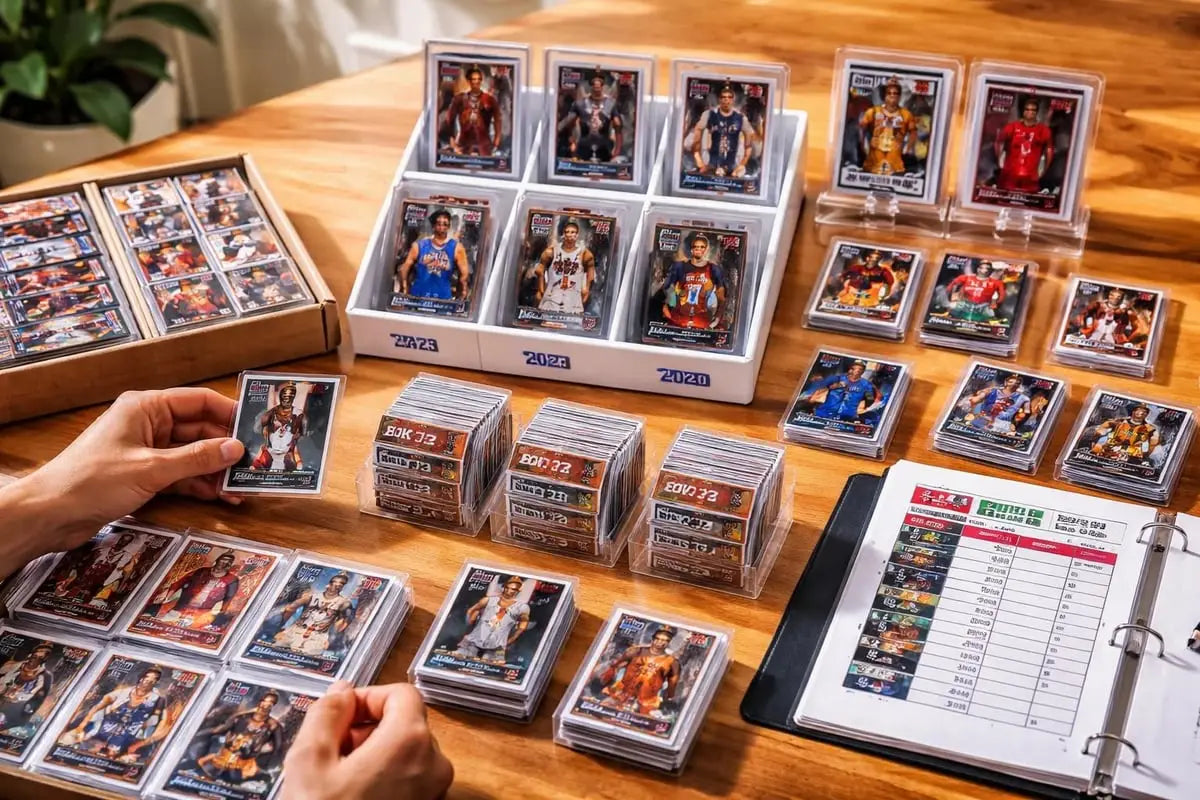
Maximizing your NBA card collection value requires proper storage from the moment you acquire cards. Environmental damage, handling wear, and improper storage destroy value quickly and permanently.
Essential Storage Supplies
Invest in quality protective supplies appropriate for your collection's value:
- Penny sleeves: Basic protection for all cards, minimal cost
- Top loaders: Rigid plastic holders for valuable individual cards
- Card savers: Semi-rigid holders ideal for cards being graded
- Magnetic holders: Premium display cases for expensive cards
- Storage boxes: Organized bulk storage for complete sets
Never store valuable nba basketball cards in rubber bands, which cause indentations and damage. Avoid acidic materials that yellow and deteriorate cards over time. Climate-controlled environments prevent warping from humidity and temperature fluctuations.
Handling Best Practices
Always handle cards by the edges, never touching surfaces that affect grading. Wash hands before handling to prevent oil transfer. Work on clean surfaces to avoid accidental damage or contamination.
When examining cards, use adequate lighting to spot condition issues without exposing cards to direct sunlight for extended periods. UV exposure fades colors and damages cardstock. Consider investing in a jeweler's loupe or magnifying glass for detailed condition assessment before purchasing raw vintage cards.
| Storage Mistake | Potential Damage | Prevention Method |
|---|---|---|
| Rubber bands | Indentations, creases | Use proper boxes with dividers |
| Direct sunlight | Fading, warping | Store in dark, climate-controlled space |
| Improper stacking | Bending, edge damage | Use top loaders or stands |
| Basement/attic storage | Moisture, temperature damage | Climate-controlled interior room |
| Handling without sleeves | Surface scratches, fingerprints | Always use penny sleeves minimum |
The Digital Revolution in NBA Basketball Cards
Technology has introduced entirely new collecting formats that coexist with physical cards. NBA digital trading cards utilize blockchain technology to create verifiable digital ownership of officially licensed basketball collectibles. These NFT-based cards offer unique benefits and challenges compared to traditional cardboard.
Understanding Digital Card Platforms
NBA Top Shot pioneered mainstream digital basketball cards, creating a marketplace where collectors purchase, sell, and trade video highlight moments. Each moment exists as a unique digital asset with verified scarcity through blockchain technology. Ownership transfers occur instantly online without shipping or physical storage concerns.
Digital cards appeal to tech-savvy collectors and younger demographics entering the hobby. Lower entry prices for base moments make collecting accessible, while rare legendary moments command prices comparable to premium physical cards. The technology ensures authenticity and prevents counterfeiting, major concerns in physical card markets.
Physical Versus Digital Collecting
Traditional collectors debate whether digital cards constitute "real" collecting. Physical card advocates value the tangible nature, historical connection, and established market infrastructure. Digital proponents embrace instant transactions, global accessibility, and innovative presentation formats impossible with cardboard.
Both formats coexist successfully in 2026. Many collectors participate in both markets, enjoying different aspects each offers. Physical nba basketball cards provide nostalgia and tradition, while digital cards deliver convenience and modern technology integration.
Current Market Trends and Investment Considerations
The basketball card market has matured significantly since the 2020-2021 boom period. Understanding current trends helps collectors make informed decisions about acquisitions and sales timing. The market has stabilized from peak prices but remains substantially elevated compared to pre-2020 levels.
Hot Players and Products in 2026
Certain players and product lines consistently generate strong collector interest. Established superstars like LeBron James, Stephen Curry, and Kevin Durant maintain steady demand across all card types. Young stars from recent drafts create speculative opportunities as collectors bet on future performance.
Premium products from Panini (the exclusive NBA card license holder from 2009-2026) command highest prices. Sets like National Treasures, Flawless, and Immaculate deliver low print runs with guaranteed autographs and memorabilia, appealing to high-end collectors. Similar to how Panini football cards dominate NFL collecting, Panini's NBA products set market standards.
Investment Risk Factors
Treating nba basketball cards as investments carries inherent risks. Player injuries, performance declines, and changing collector preferences create volatility. Cards should not represent your only investment portfolio component, but rather an alternative asset class within diversified holdings.
Market manipulation concerns exist, particularly with modern products. Large breakers and investors can artificially inflate prices through coordinated buying. Always research independently and avoid purchasing based solely on social media hype. Sustainable value growth requires genuine demand, not speculation bubbles.
Consider liquidity when investing in cards. Ultra-high-end pieces above $10,000 have smaller buyer pools and may take months to sell at full value. More modest cards in the $100-$1,000 range typically sell faster with less price negotiation. Diversifying across multiple cards at different price points improves overall liquidity.
Navigating the NBA Basketball Card Marketplace
Buying and selling nba basketball cards occurs through multiple channels, each offering distinct advantages and challenges. Understanding these marketplaces helps you find better deals and maximize returns when selling.
Online Marketplaces and Auction Platforms
eBay remains the largest secondary market for basketball cards, providing access to millions of listings worldwide. Advanced search filters help locate specific cards, while sold listings reveal actual market values. Buyer protection programs offer some security, though counterfeit cards occasionally appear despite platform efforts.
Specialized sports card marketplaces like COMC, StarStock, and Goldin cater specifically to collectors. These platforms provide authentication services and often attract serious collectors willing to pay premium prices for verified quality. Building collections through these venues ensures legitimacy but may cost more than general marketplaces.
Local Card Shops and Shows
Physical card shops offer personal service, immediate possession, and the ability to inspect cards before purchasing. Building relationships with shop owners provides access to new inventory and potential favorable pricing. However, selection may be limited compared to online options, and prices sometimes exceed online equivalents.
Card shows bring together dealers, collectors, and the community for buying, selling, and trading. Large national shows feature hundreds of vendors and special guests, while local monthly shows provide regular opportunities. Shows excel for examining vintage cards where condition details matter significantly. The experience of in-person collecting creates connections impossible through online transactions.
Many collectors combine multiple purchasing channels, using each for different needs. Online markets work well for specific targeted cards, while shops and shows provide discovery opportunities and the social aspects of collecting. Exploring various options helps you develop preferred sources based on your collecting style.
Specializing in Rookie Cards for Maximum Returns
Rookie cards represent the most popular and potentially profitable category of nba basketball cards. Every player's rookie cards come from their first NBA season, making that year's products highly significant. Understanding rookie card dynamics improves your investment success rate.
Identifying Future Stars
Successful rookie card investing requires projecting which players will achieve long-term success. Consider these factors:
- Draft position and college pedigree
- First-season performance and playing time
- Team situation and developmental support
- Physical tools and skill progression
- Injury history and durability concerns
Not every high draft pick becomes a star. Conversely, some late-round picks develop into elite players whose early cards become valuable. Research player statistics, advanced metrics, and expert analysis rather than relying solely on hype. Similar principles apply whether collecting NBA trading cards or other sports.
Timing Your Rookie Card Purchases
Rookie card prices fluctuate dramatically during a player's first season. Pre-season hype drives initial prices high, but poor early performance can crash values. Waiting until mid-season after performance stabilizes sometimes offers better entry points, though breakout players may have already appreciated significantly.
Championship runs dramatically increase rookie card values. A first-year player contributing to a title team sees immediate price appreciation. Monitoring playoff performance helps identify cards poised for growth before prices fully adjust to new performance levels.
Building a valuable NBA basketball card collection requires knowledge, patience, and strategic thinking across vintage treasures and modern releases. Understanding card types, grading standards, market dynamics, and proper storage protects your investment while maximizing enjoyment of this rewarding hobby. Whether you focus on rookie cards, chase rare autographs, or complete vintage sets, the basketball card market in 2026 offers exciting opportunities for collectors at every level. TradingCardsMarketplace provides the trusted platform and extensive selection you need to discover your next prized addition, connecting passionate collectors with premium cards and the expertise to build collections that last.