Baseball card boxes represent the foundation of the modern collecting hobby, serving as the primary distribution method for sealed trading cards. Whether you're a seasoned collector or just entering the hobby, understanding the various box formats, their contents, and their relative values has become essential knowledge in 2026. The landscape has evolved dramatically over the past decade, with manufacturers introducing diverse product lines that cater to different budgets and collecting goals, making the selection process both exciting and complex.
Understanding Baseball Card Box Formats
The trading card industry has established several distinct box formats, each designed to serve specific market segments. These formats differ significantly in price point, configuration, and expected contents.
Hobby Boxes
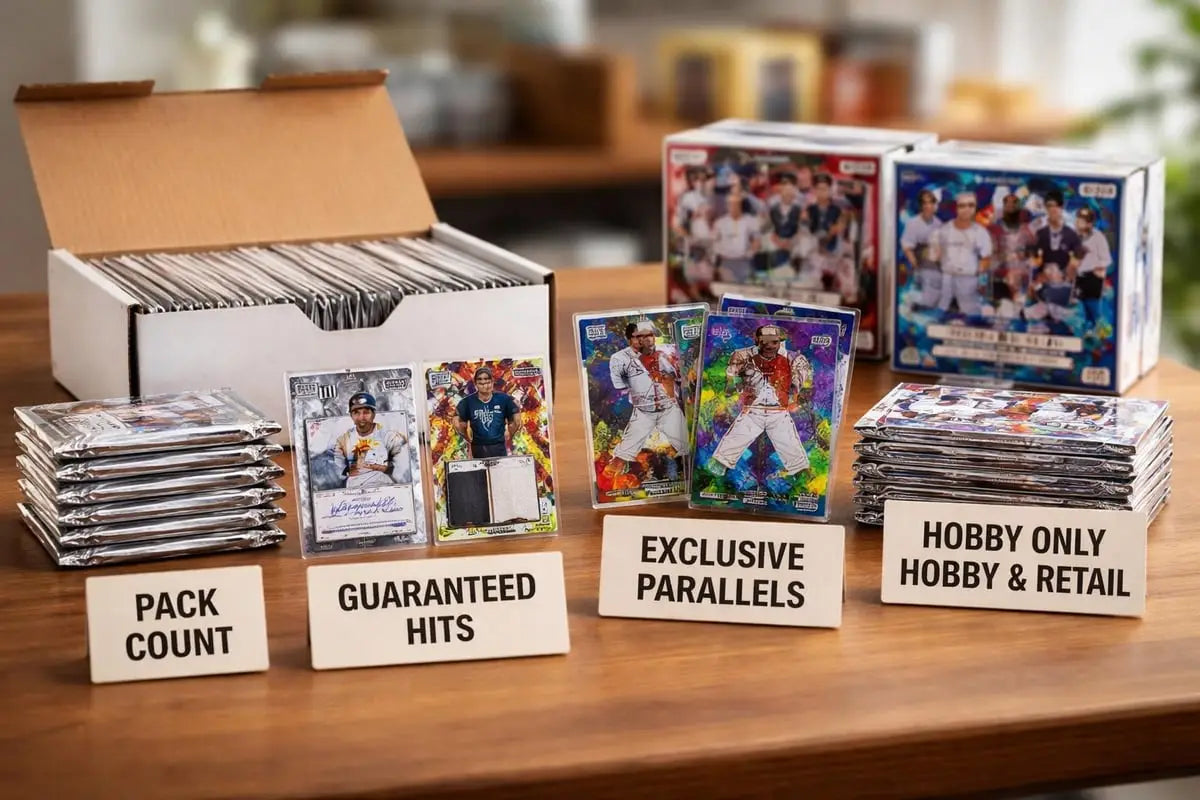
Hobby boxes remain the premier format for serious collectors. Sold exclusively through hobby shops and specialized retailers, these boxes typically contain 24 packs with enhanced odds for autographs, memorabilia cards, and rare parallels. BaseballCardPedia provides comprehensive information on baseball card sets, including detailed breakdowns of box contents and release dates that help collectors make informed purchasing decisions.
Key characteristics of hobby boxes include:
- Exclusive parallel variations not found in retail products
- Guaranteed autograph or memorabilia cards in most releases
- Higher price points ranging from $100 to $500 or more
- Premium card stock and finishing techniques
- Direct distribution through authorized hobby dealers
Retail Boxes
Retail boxes offer an accessible entry point for collectors shopping at major chain stores. These products feature modified configurations with different insert ratios and parallel distributions compared to their hobby counterparts. The different types of baseball card boxes at TradingCardsMarketplace highlight how retail formats provide value at lower price points while still delivering the excitement of pack opening.
The distinction between retail and hobby has become more pronounced in recent years, with manufacturers creating entirely separate card designs and numbering systems for each channel.
Blaster Boxes
Blaster boxes have emerged as one of the most popular retail formats. These compact boxes typically contain 7-11 packs and retail for $20-$40, making them perfect for casual collectors or those testing new products before committing to full hobby boxes.
| Format Type | Pack Count | Price Range | Exclusive Content | Best For |
|---|---|---|---|---|
| Hobby Box | 20-24 | $100-$500+ | Yes | Serious collectors |
| Retail Box | 24-36 | $20-$60 | Sometimes | Casual buyers |
| Blaster Box | 7-11 | $20-$40 | Often | Entry-level |
| Mega Box | 10-16 | $30-$50 | Usually | Retail exclusives |
Collector's Boxes and Special Editions
Premium collector's boxes represent the high end of the market. These limited-production releases feature exclusive card designs, higher autograph guarantees, and premium packaging. Products like National Treasures and Topps Archives command premium prices but deliver corresponding value through guaranteed high-end content.
The Economics of Box Breaking
Understanding the financial dynamics of baseball card boxes requires examining both immediate costs and potential returns. The practice of "box breaking" has become increasingly sophisticated, with collectors analyzing odds and calculating expected values before purchasing.
Calculating Expected Value
Expected value (EV) calculations help collectors make informed purchasing decisions. This involves multiplying the probability of pulling specific cards by their market values, then comparing the total to the box price. While variance means individual boxes can perform above or below expectations, understanding EV provides a rational framework for collecting decisions.
Factors affecting box value:
- Current player performance and popularity
- Rookie class strength in a given year
- Product scarcity and print runs
- Market demand for specific sets
- Authentication and grading potential
The independent audit by Fanatics debunking loaded boxes myths confirmed that high-value cards are inserted randomly within packaged products, ensuring fairness across all baseball card boxes sold through legitimate channels.
Market Trends in 2026
The baseball card market has experienced significant evolution since the pandemic-era boom. While prices have normalized from 2021 peaks, strong fundamentals continue supporting the hobby. Modern players like Shohei Ohtani, Bobby Witt Jr., and emerging rookies drive demand for current-year products, while vintage box values remain stable or appreciate based on condition rarity.
Manufacturer Differences and Product Lines
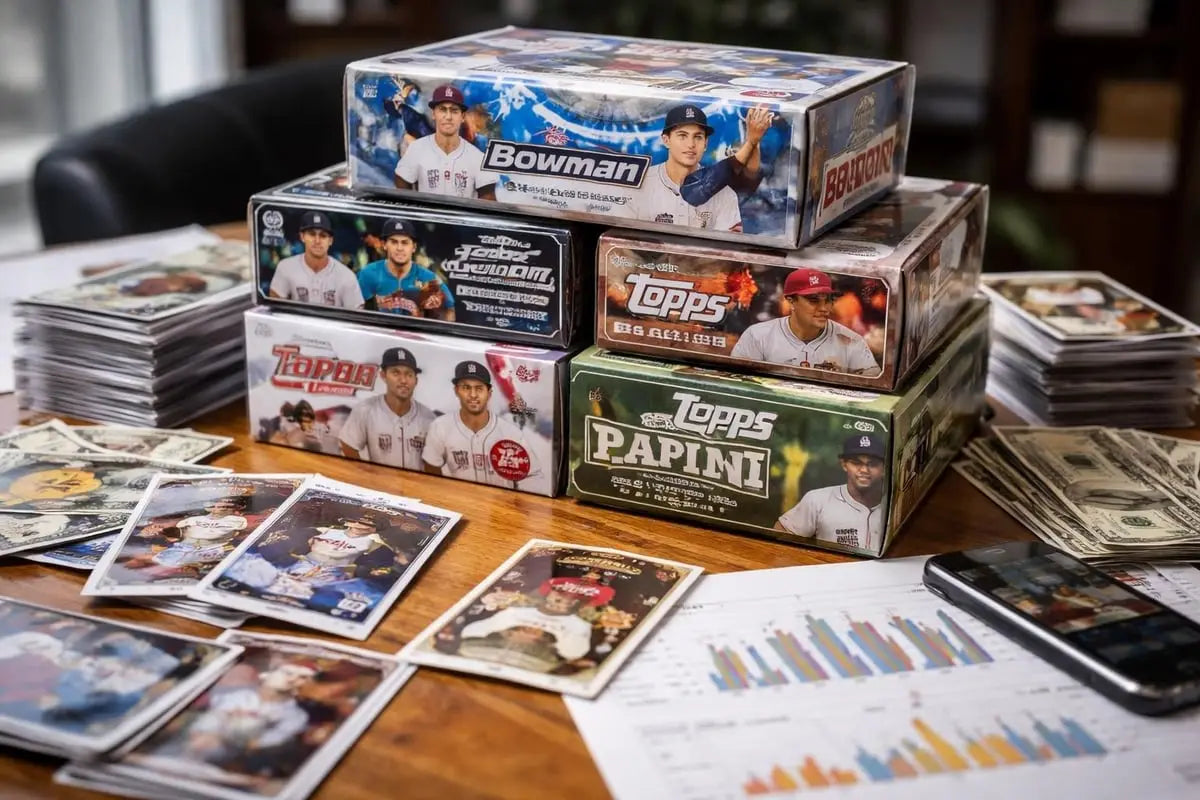
Each major manufacturer brings distinct approaches to baseball card boxes, creating diverse options for collectors with varying preferences.
Topps Heritage and Tradition
As the longest-running baseball card manufacturer, Topps has shaped the industry since 1951. Their product lines span from flagship Series 1 and 2 releases to premium offerings like Chrome, Stadium Club, and Heritage. Topps baseball card products include numerous series that cater to different collecting philosophies, from set builders to hit chasers.
Topps maintains exclusive rights to MLB logos and team names, giving their products authentic appeal that resonates with traditional collectors. Their 2026 releases continue this legacy while incorporating modern design elements and technology like augmented reality features.
Panini's Innovation
Despite lacking MLB licensing, Panini has carved out substantial market share through creative designs and aggressive autograph acquisition. Their products focus heavily on player imagery and premium materials. Products like Diamond Kings and National Treasures deliver high-end experiences with guaranteed memorabilia content.
Emerging Manufacturers
The trading card landscape continues evolving with new manufacturers entering the market. Fanatics' acquisition of Topps in 2022 has begun reshaping product offerings, with collectors watching closely to see how this impacts future releases and box configurations.
Strategic Box Selection for Different Collector Types
Choosing the right baseball card boxes depends heavily on individual collecting goals and budget parameters. Different collector profiles benefit from tailored approaches.
Set Builders
Collectors focused on completing sets should prioritize high-pack-count boxes with consistent base card distribution. Retail boxes and blasters often provide better value for accumulating base cards, while hobby boxes introduce unnecessary premium content that doesn't advance set-building goals.
Recommended strategies:
- Calculate cards needed versus box contents
- Compare pack-to-card ratios across formats
- Consider mixing retail and hobby for optimal coverage
- Join group breaks for specific team needs
- Track checklist progress using digital tools
Investment-Focused Collectors
Those treating baseball card boxes as investments require different analytical frameworks. Focus shifts to products with proven track records, strong rookie classes, and limited production runs. Sealed boxes often appreciate more consistently than opened singles, particularly for vintage products.
The top baseball box cards to collect in 2026 provides current market insights that help investment-minded collectors identify promising opportunities in today's market.
Player Collectors
Collectors focused on specific players or teams benefit from targeted box selection. Understanding which products feature specific players as signers or have favorable odds for team-specific hits makes purchasing decisions more efficient. Checking product information sheets before buying prevents disappointment and wasted resources.
Authentication and Box Integrity
Ensuring the authenticity and integrity of baseball card boxes has become increasingly important as values have risen. Counterfeit products and tampered boxes represent real risks in the secondary market.
Identifying Legitimate Products
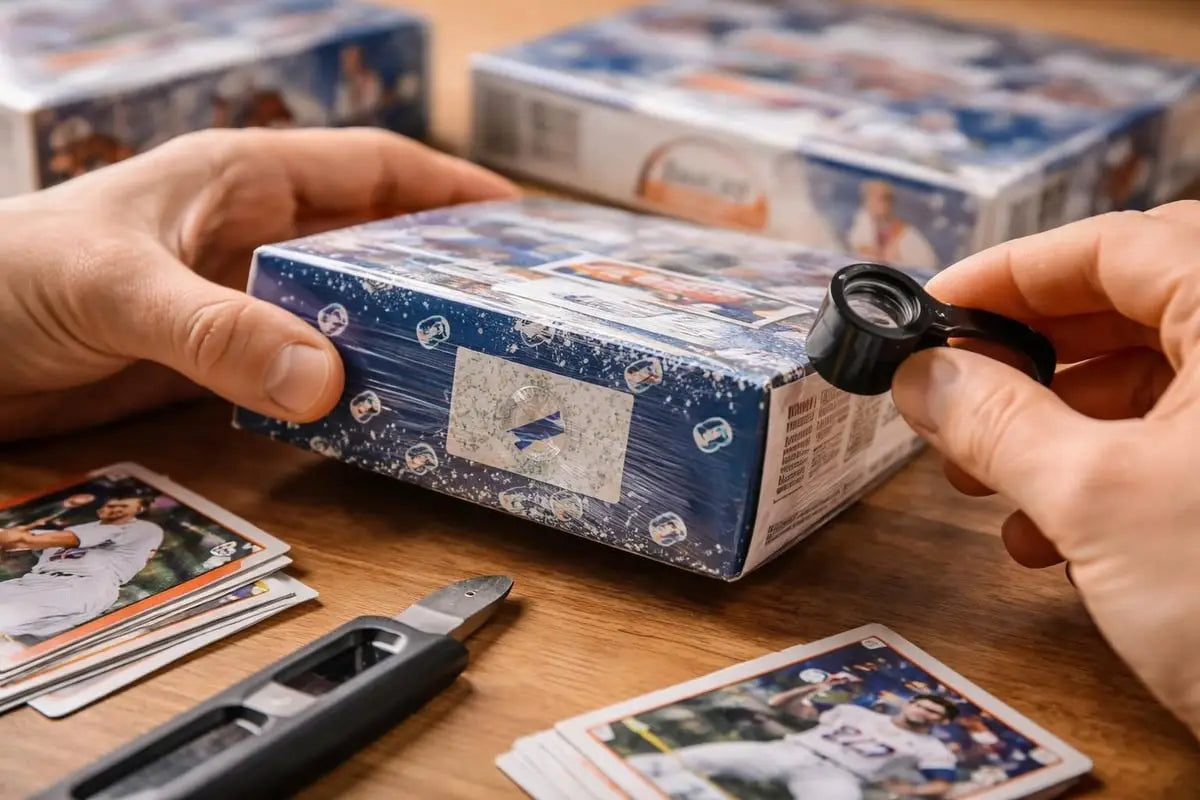
Authentic boxes display specific characteristics including proper shrink-wrapping, manufacturer seals, and batch coding. Purchasing from authorized dealers provides the strongest protection, though secondary market options exist for discontinued products.
| Red Flag | What to Check | Safe Practice |
|---|---|---|
| Damaged shrink wrap | Tears, resealing attempts | Buy factory sealed only |
| Missing batch codes | Check box bottom/sides | Verify with manufacturer |
| Suspiciously low prices | Compare to market rates | Research seller reputation |
| Unclear provenance | Request purchase documentation | Use trusted platforms |
Sealed Box Grading
Professional grading services now authenticate and grade sealed boxes, providing collectors with certification of condition and originality. This service particularly benefits vintage boxes where values justify the grading fees. Graded boxes command premiums due to verified authenticity and preserved condition.
Storage and Preservation Best Practices
Proper storage protects both the boxes and their contents from environmental damage that can diminish value over time.
Environmental Controls
Critical storage considerations:
- Temperature stability between 65-70°F
- Humidity control at 40-50% relative humidity
- Protection from direct sunlight
- Elevated storage to prevent flood damage
- Dust-free environment maintenance
Sealed baseball card boxes are particularly sensitive to humidity fluctuations, which can affect adhesive on packs and cause wax deterioration in vintage products. Climate-controlled storage represents essential protection for valuable inventory.
Organization Systems
Effective organization systems help collectors track inventory, monitor values, and locate specific boxes quickly. Digital inventory management tools integrate with pricing databases to provide real-time portfolio valuations. Many serious collectors photograph boxes upon acquisition, documenting condition for insurance purposes.
Collectors can explore their favorite products at TradingCardsMarketplace to track new releases and compare them with their existing collections.
The Group Break Phenomenon
Group breaks have revolutionized how collectors access baseball card boxes, particularly premium products with price points exceeding individual budgets. This collaborative model distributes both costs and contents among multiple participants.
How Group Breaks Work
Break organizers purchase boxes and sell spots based on teams, divisions, or randomized assignments. During live-streamed openings, cards are distributed according to the predetermined structure. This model provides access to high-end products while limiting individual risk exposure.
Benefits include lower entry costs, social interaction with fellow collectors, and opportunity to acquire team-specific cards without purchasing entire boxes. However, participants must trust break operators and accept that variance may result in receiving minimal value relative to their investment.
Evaluating Break Opportunities
Before joining breaks, collectors should research the operator's reputation, understand the break structure, verify box authenticity, and calculate expected value based on team assignment. Watching previous breaks provides insight into operator professionalism and transparency.
The seller profiles at TradingCardsMarketplace help collectors identify reputable dealers and break operators with established track records in the community.
Modern vs. Vintage Box Considerations
The baseball card boxes market divides into distinct modern and vintage segments, each requiring specialized knowledge and different investment approaches.
Vintage Box Scarcity
Vintage boxes from the 1980s and earlier represent increasingly scarce commodities. Unopened wax boxes from iconic years command substantial premiums, particularly for sets featuring Hall of Fame rookies. The 1986 Fleer basketball wax box, for example, has appreciated dramatically due to the Michael Jordan rookie card, illustrating how single cards can drive entire box values.
Vintage box considerations:
- Wax deterioration and pack integrity
- Authentication challenges
- Limited supply dynamics
- Historical significance premiums
- Condition sensitivity
Modern Product Advantages
Modern baseball card boxes offer superior quality control, known configurations, and transparent odds. Manufacturers publish detailed product information sheets specifying exact contents and hit rates, removing much of the uncertainty inherent in vintage collecting.
The expert buying guide for hobby boxes emphasizes vetting retailers and understanding configurations when selecting modern products, ensuring collectors receive legitimate products with appropriate expectations.
Timing Your Baseball Card Box Purchases
Strategic timing significantly impacts the value proposition of baseball card boxes. Market dynamics create predictable patterns that savvy collectors exploit.
Release Cycles and Pricing
New products typically command premium prices during the first weeks after release, driven by initial excitement and limited availability. Prices often decline 30-60 days post-release as supply increases and initial demand subsides. Exceptions occur when rookie classes exceed expectations or product scarcity becomes apparent.
Optimal buying windows:
- Pre-order pricing for guaranteed allocation
- 6-8 weeks post-release for price stabilization
- End-of-year clearance for remaining inventory
- Secondary market for discontinued products
- Off-season periods when demand softens
Seasonal Considerations
The baseball calendar influences box values throughout the year. Spring training generates excitement for upcoming seasons, playoff races drive interest in contending team players, and off-season periods often see softer pricing. Understanding these cycles helps collectors maximize purchasing power.
Building a Balanced Collection
Successful collectors develop diversified approaches to baseball card boxes rather than concentrating exclusively on single strategies or products.
Portfolio Theory Application
Investment principles translate effectively to card collecting. Diversifying across eras, manufacturers, and price points reduces risk while maintaining upside potential. Allocating budget among vintage sealed boxes, modern hobby boxes, and strategic retail purchases creates balanced exposure to different market segments.
Some collectors dedicate specific percentages to each category, such as 40% modern hobby, 30% vintage, 20% retail products, and 10% experimental purchases in new releases or emerging manufacturers.
Setting Realistic Expectations
Understanding that most boxes will not return their purchase price in immediate resale value helps maintain appropriate perspectives. The enjoyment of opening, building sets, and occasionally hitting significant cards represents the hobby's true value proposition. When viewing boxes purely as investments, expectations should align with long-term appreciation rather than short-term flipping.
Collectors should visit TradingCardsMarketplace to research current market values and compare pricing across different box formats before making purchasing decisions. The marketplace provides transparency that helps set realistic expectations about both costs and potential returns.
Baseball card boxes continue evolving as manufacturers innovate with new formats, content guarantees, and collecting experiences that appeal to diverse audiences. Understanding the distinctions between hobby and retail formats, evaluating boxes based on individual collecting goals, and maintaining proper storage all contribute to long-term satisfaction and value preservation. Whether you're building complete sets, chasing autographs, or investing in sealed vintage boxes, TradingCardsMarketplace offers the selection and expertise to support your collecting journey with authentic products and reliable service.