

Topps football cards have shaped the sports collectibles industry for nearly seven decades, establishing themselves as cornerstone pieces in any serious collection. From the groundbreaking 1956 set that launched the company's football card legacy to today's innovative releases featuring autographs, relics, and cutting-edge designs, Topps continues to dominate the market. Understanding the history, value factors, and collecting strategies for these cards helps enthusiasts make informed decisions whether they're pursuing vintage Hall of Fame rookies or chasing the latest parallel inserts. The enduring appeal of Topps football cards stems from their combination of iconic photography, player selection, and consistent quality that has made them the benchmark for football card collectors worldwide.
The Historical Significance of Topps Football Cards
The journey of Topps as a trading card manufacturer began in the 1950s when the company transitioned from chewing gum production to becoming a dominant force in sports collectibles. Their entry into the football card market created competition that pushed innovation and quality standards across the entire industry.
Early Sets That Defined the Hobby
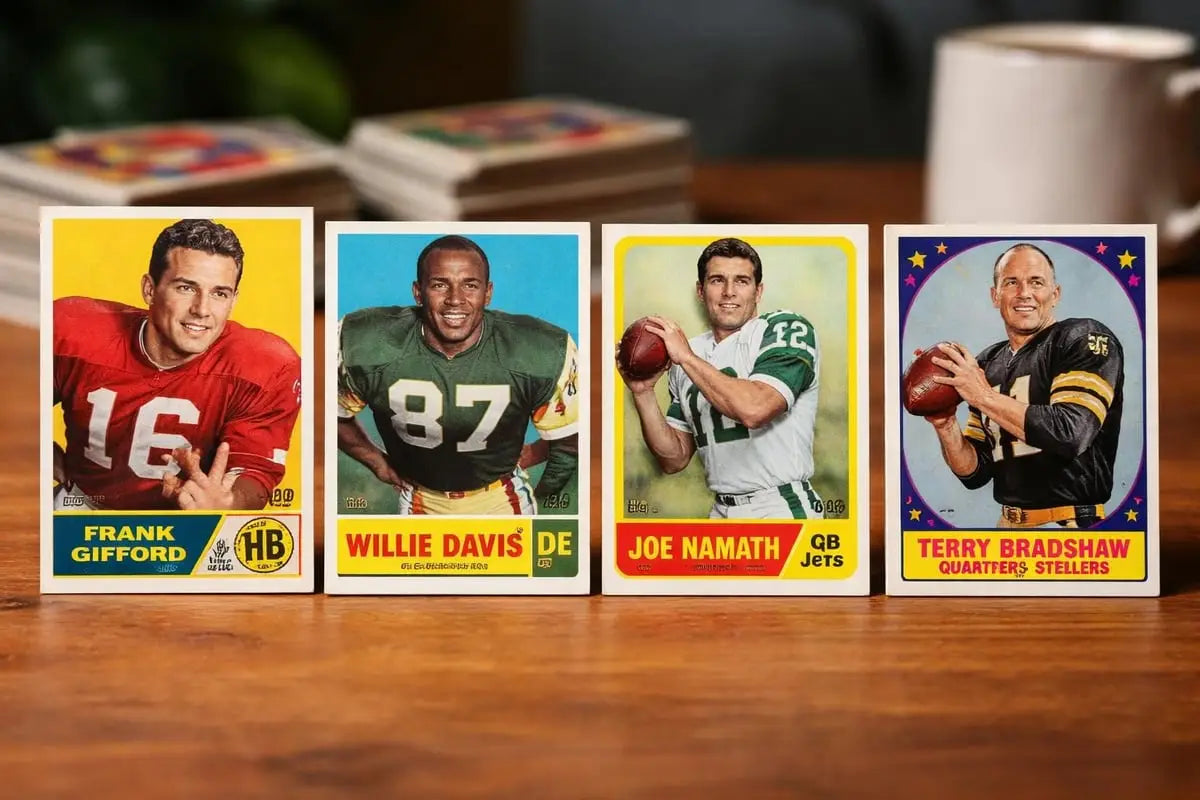
The 1956 Topps football set marked the company's debut in football cards, though production challenges led to a limited release. This scarcity has made surviving cards from this inaugural set highly valuable among collectors today. The following year, the 1957 Topps Football set established a stronger foothold with better distribution and featured rookie cards of future legends including Bart Starr and Johnny Unitas.
These early releases set design standards that influenced decades of subsequent productions. The card dimensions, photographic quality, and statistical information presentation became templates that Topps refined year after year.
Key characteristics of vintage Topps football cards include:
- Bold color schemes that made players stand out
- Team-specific border colors for easy identification
- Comprehensive player statistics on card backs
- Action photography that captured game-day intensity
- Consistent numbering systems that facilitated set completion
The Golden Era of the 1960s and 1970s
The 1965 Topps Football set represented a significant milestone with its larger card dimensions and the inclusion of Joe Namath's legendary rookie card. This set demonstrated Topps' willingness to innovate with format changes that enhanced visual appeal and collectibility. The larger size allowed for more dramatic photography and better showcase of player portraits.
The 1971 set introduced another memorable design element with black borders that created striking visual contrast, though these borders proved challenging for collectors seeking pristine condition examples. This set also marked the first acknowledgment of the AFL-NFL merger in Topps football cards, reflecting the sport's organizational evolution. Cards from this era remain popular among collectors who appreciate vintage aesthetics and historical significance.
Understanding Value Drivers for Topps Football Cards
Multiple factors influence the market value of topps football cards, ranging from player performance to card condition and production variations. Sophisticated collectors analyze these elements to build valuable portfolios while newer enthusiasts benefit from understanding basic valuation principles.
Player Performance and Hall of Fame Status
Rookie cards of players who achieved Hall of Fame status consistently command premium prices in the secondary market. Cards featuring Walter Payton, Joe Montana, Jerry Rice, and Dan Marino represent blue-chip investments that maintain value through market fluctuations. Performance milestones such as Super Bowl victories, MVP awards, and statistical records directly impact card demand and pricing.
| Player Category | Typical Value Range | Market Stability |
|---|---|---|
| Hall of Fame Rookies | $500 - $50,000+ | High |
| All-Pro Players | $50 - $5,000 | Moderate |
| Solid Starters | $10 - $500 | Variable |
| Bench Players | $1 - $50 | Low |
Contemporary stars like Patrick Mahomes and Justin Jefferson see their card values fluctuate based on weekly performance and career trajectory. This volatility creates opportunities for collectors who can identify undervalued players before breakout seasons.
Condition Grading and Preservation
Professional grading services like PSA, BGS, and SGC provide objective condition assessments that significantly impact topps football cards values. A card graded PSA 10 (Gem Mint) typically sells for multiples of the same card in ungraded or lower-grade condition. Centering, corner sharpness, surface quality, and edge condition all contribute to final grades.
Grading impact on card values:
- PSA 10 or BGS 9.5+: Premium prices, often 5-10x raw card value
- PSA 9 or BGS 9: Strong prices, typically 2-4x raw value
- PSA 8 or BGS 8: Moderate premium over raw
- PSA 7 or lower: Minimal premium, primarily for vintage cards
Proper storage in penny sleeves, top loaders, and climate-controlled environments protects investment quality. Cards stored in attics, basements, or exposed to sunlight frequently suffer condition degradation that permanently reduces value.
Production Variations and Insert Cards
Modern topps football cards feature numerous parallel versions and insert sets that create tiered collecting levels. Base cards provide affordable entry points while autograph cards, memorabilia cards, and numbered parallels offer premium collecting experiences. Chrome refractors, with their distinctive prismatic appearance, command higher prices than standard base cards of the same players.
Limited production runs increase scarcity and value. Cards numbered to 10 copies or fewer often sell for hundreds or thousands of dollars, especially when featuring star players. Print runs, serial numbering, and special parallel designations like "Gold," "Black," or "Superfractor" indicate rarity levels. At TradingCardsMarketplace, collectors find diverse Topps variations spanning vintage classics to modern inserts.
Building a Strategic Topps Football Card Collection
Successful collecting requires clear objectives, budget discipline, and market knowledge. Whether focusing on team collections, player collections, or set completion, strategic approaches maximize enjoyment and potential investment returns.
Focus Areas for Different Collector Types
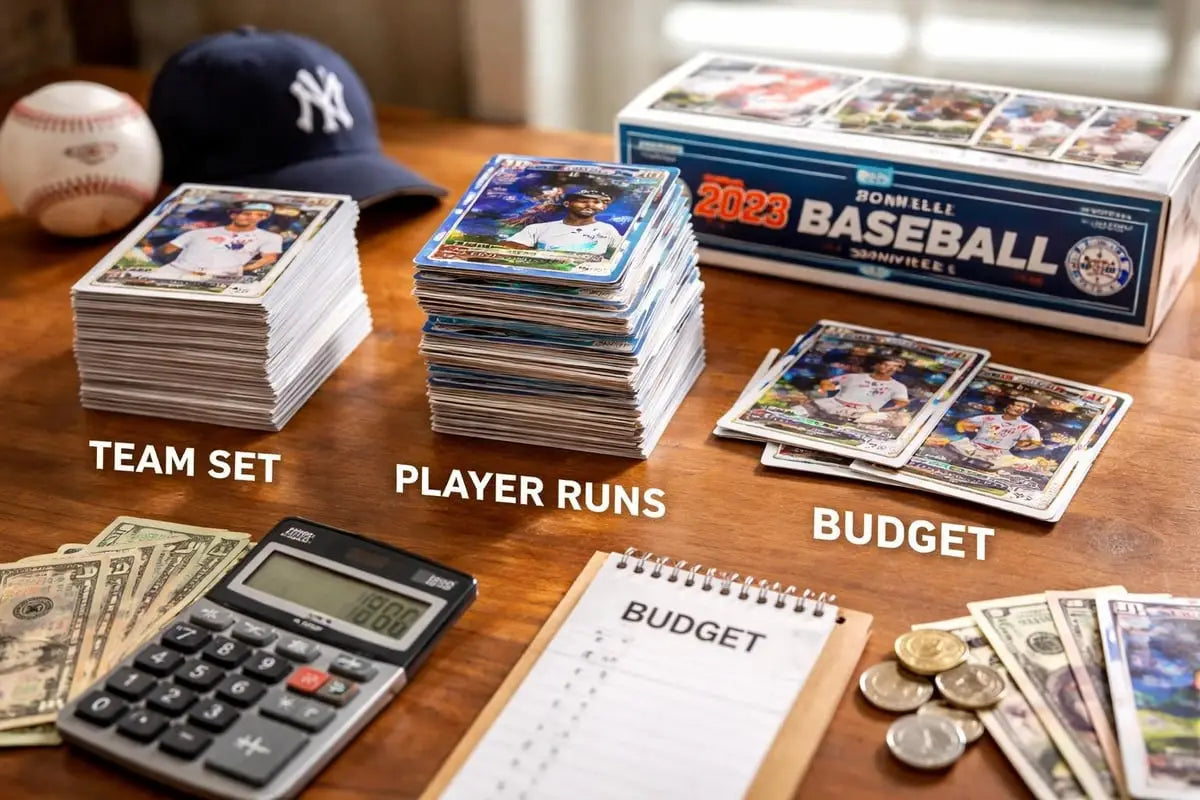
Team collectors pursue every card featuring their favorite franchise, creating comprehensive historical archives that document roster evolution. This approach offers manageable scope while allowing specialization in particular eras or players. Complete rainbow collections of star players across all parallel variations represent advanced collecting goals that require significant investment.
Set builders aim to complete entire yearly releases, experiencing satisfaction from filling every slot in their albums. Vintage set completion presents formidable challenges due to scarcity and cost, while modern sets offer more accessible goals. Player collectors concentrate on specific athletes, tracking their entire card history from rookie issues through retirement and beyond.
Collection strategy comparison:
- Team Collections: Moderate difficulty, strong personal connection, manageable costs
- Player Collections: Variable difficulty based on player popularity, focused investment
- Set Completion: High difficulty for vintage, satisfying achievement, requires patience
- Parallel Rainbows: Very high difficulty, premium costs, showcase pieces
Budget Management and Market Timing
Establishing spending limits prevents financial overextension while allowing steady collection growth. Many collectors allocate monthly budgets for new acquisitions, balancing immediate desires against long-term goals. Market timing affects purchase decisions, as card prices fluctuate based on player performance, playoff success, and broader economic conditions.
Off-season purchasing often yields better values as demand decreases between football seasons. Buying during market dips requires patience but rewards disciplined collectors with below-average acquisition costs. Conversely, selling during playoff runs or after major player achievements captures peak demand periods.
Authentication and Counterfeit Awareness
The increasing value of topps football cards has unfortunately attracted counterfeiters who produce fake cards to deceive buyers. Learning authentication markers helps collectors avoid costly mistakes when purchasing high-value vintage or modern cards. Professional grading provides authentication alongside condition assessment, offering security for significant investments.
Examining card stock quality, printing precision, color consistency, and cutting accuracy reveals many counterfeits. Authentic vintage cards exhibit specific paper characteristics and aging patterns that skilled collectors recognize. For expensive purchases, requesting grading or professional authentication protects against fraud. Resources like TradingCardsMarketplace vet their inventory to ensure authenticity and quality.
Modern Innovations in Topps Football Card Production
Topps continues evolving its football card offerings with technological advances and creative design concepts that attract new collectors while satisfying veteran enthusiasts. Recent innovations demonstrate the company's commitment to remaining relevant in competitive sports collectibles markets.
Digital Integration and Hybrid Collecting
Recent developments in trading card innovation show how companies like Topps introduce unique features like debut patch cards with game-worn memorabilia and autographs. These premium inserts combine traditional card elements with exclusive materials that increase desirability and value. Authentication certificates and serial numbering verify legitimacy for these high-end offerings.
Digital card platforms complement physical collecting, allowing enthusiasts to trade virtual versions of their favorite cards. Some releases include redemption codes for digital counterparts, creating cross-platform collecting ecosystems. While purists prefer physical cards, digital integration attracts younger collectors familiar with digital ownership concepts.
International Expansion and Soccer Cards
Topps' launch of Premier League collections demonstrates their expansion beyond American football into global soccer markets. This diversification introduces Topps quality standards to international audiences while creating new collecting categories for existing customers. Cross-sport collectors appreciate the consistent design aesthetics and production quality across different Topps releases.
The company's partnerships with leagues and licensing organizations ensure authentic team logos, uniforms, and branding appear on all cards. These official relationships differentiate Topps from unauthorized producers and maintain brand credibility. Recent licensing deals expand Topps' reach into new sports and entertainment categories beyond traditional football cards.
Selling and Trading Topps Football Cards
Understanding market dynamics and sales channels maximizes returns when liquidating portions of collections or upgrading to better versions. Different selling methods suit various card types, values, and seller preferences.
Online Marketplaces and Auction Platforms
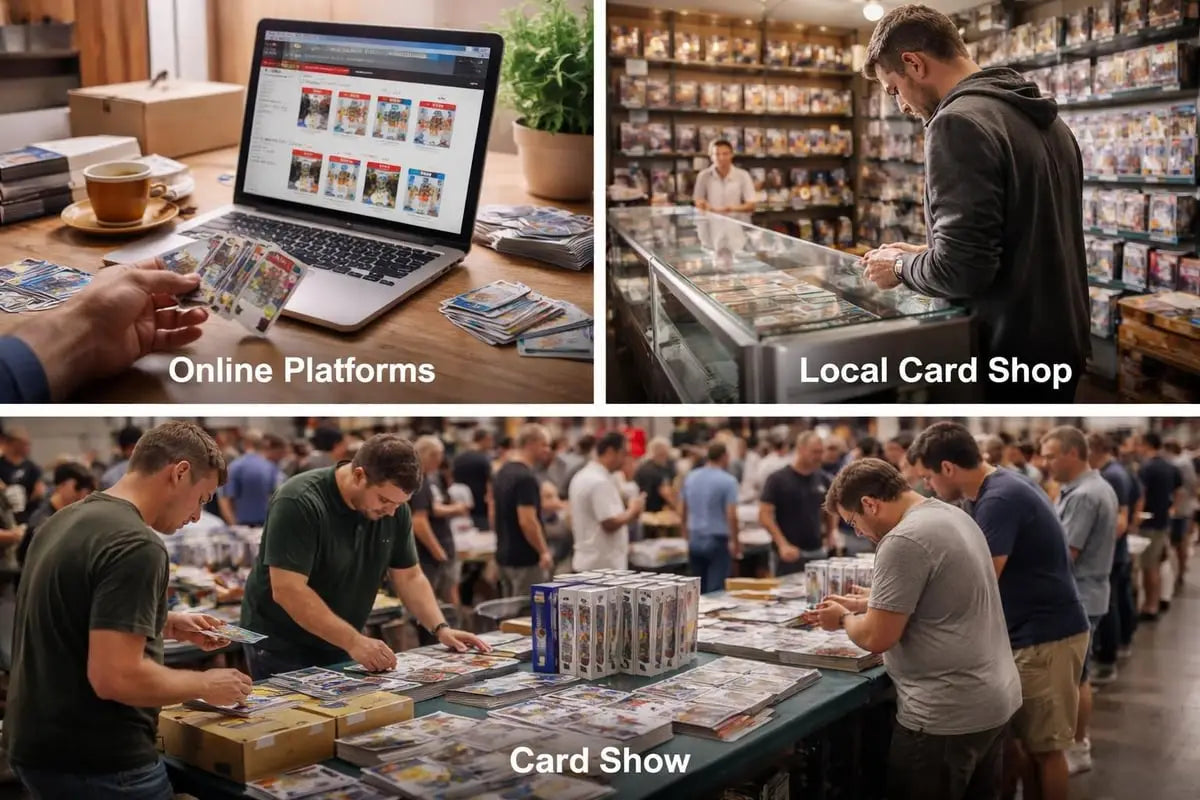
eBay remains the dominant platform for individual card sales, offering global reach and established buyer trust. Listing optimization through detailed descriptions, quality photographs, and competitive pricing improves sale success rates. Auction formats work well for rare or high-value cards where competitive bidding establishes true market value, while fixed-price listings suit common cards with established price points.
Specialty trading card marketplaces provide focused audiences of serious collectors willing to pay premium prices for quality items. These platforms often charge lower fees than general marketplaces while delivering more qualified buyers. Building seller reputation through positive feedback and professional service encourages repeat customers and higher final sale prices.
Local Card Shops and Card Shows
Brick-and-mortar card shops offer immediate payment and personal interaction, though prices typically run below online market values. Shop owners need profit margins when reselling purchased cards, limiting what they can offer sellers. However, eliminating shipping logistics, payment processing fees, and fraud risks provides compensating benefits for some sellers.
Card shows create concentrated marketplaces where collectors and dealers gather to buy, sell, and trade. Show attendance allows direct negotiation, instant payment, and opportunity to assess cards in person before purchasing. Vendor tables cost money but provide access to hundreds of potential buyers during a single weekend.
Trading Within Collector Communities
Active trading communities exist on social media platforms, dedicated forums, and collecting apps. Trading eliminates monetary transactions while allowing collectors to acquire wanted cards by offering duplicates or cards outside their focus areas. Successful trading requires clear communication about card conditions, fair value assessment, and reliable shipping practices.
Building relationships within collector communities provides market intelligence, trading opportunities, and hobby enjoyment beyond mere acquisition. Experienced collectors mentor newcomers, sharing authentication knowledge and market insights that benefit the entire hobby. These connections often lead to preferential access to cards before they reach public markets.
Preserving and Displaying Your Collection
Proper storage and display protect card condition while allowing appreciation of collection achievements. Balancing preservation with accessibility requires thoughtful organization and appropriate supplies.
Storage Solutions for Different Collection Sizes
Small collections fit comfortably in binder pages with nine-pocket sleeves that allow easy viewing and reorganization. Ensure acid-free materials prevent chemical damage over time. Larger collections benefit from storage boxes designed specifically for trading cards, available in various sizes from 200-count boxes to 5,000-count monsters.
| Storage Method | Capacity | Protection Level | Display Value |
|---|---|---|---|
| Binder Pages | 100-500 cards | Good | Excellent |
| Top Loaders | 1-50 cards | Excellent | Good |
| Storage Boxes | 200-5,000+ cards | Good | Poor |
| Display Cases | 1-20 cards | Excellent | Excellent |
| Graded Slabs | Individual | Excellent | Excellent |
Climate control prevents warping, fading, and moisture damage that devastate card conditions. Basements prone to flooding and attics experiencing temperature extremes create hostile storage environments. Dedicated storage spaces with consistent temperature and humidity levels preserve cards for decades.
Display Options That Protect Value
Graded cards in protective slabs naturally lend themselves to display in cases, on shelves, or mounted on walls. UV-protective glass prevents sunlight damage while showcasing prized possessions. Rotating displays allow fresh appreciation of different collection segments while keeping other cards safely stored.
Shadow boxes create attractive wall displays for themed card groupings like Hall of Fame rookies, championship team sets, or favorite players. Custom framing elevates presentation quality but requires careful mounting techniques that don't damage cards. Removable mounting methods preserve future selling options by maintaining card integrity.
Investment Considerations for Topps Football Cards
While many collect purely for enjoyment, understanding investment dynamics helps make informed financial decisions about topps football cards purchases and sales. Treating collections as investments requires different mindsets than pure hobby collecting.
Market Cycles and Timing Strategies
Trading card markets experience cyclical boom and bust periods influenced by economic conditions, media attention, and generational interests. The 2020-2021 pandemic period saw unprecedented price increases as stimulus money and limited entertainment options drove collecting interest. Subsequent corrections brought many cards back toward historical norms, though some sustained elevated valuations.
Market cycle phases:
- Accumulation: Savvy investors acquire quality cards at depressed prices
- Growth: Increasing interest drives steady price appreciation
- Euphoria: Rapid price increases attract speculative buyers
- Distribution: Smart money begins selling to eager new collectors
- Decline: Prices correct as demand normalizes
Long-term perspectives spanning decades typically yield positive returns for quality vintage cards and rookie cards of Hall of Fame players. Short-term speculation carries higher risks but potentially higher rewards for those correctly anticipating player breakouts or market trends.
Diversification Across Eras and Players
Portfolio diversification principles apply to card collecting just as they do to stock investing. Concentrating exclusively on current players or single teams creates vulnerability to performance declines or market shifts. Balancing vintage cards, modern rookies, established stars, and emerging players spreads risk while maintaining upside potential.
Allocating portions of collecting budgets to different value tiers creates resilience against market volatility. Blue-chip Hall of Fame rookies provide stability, current star cards offer growth potential, and prospect cards represent speculative positions. This balanced approach mirrors sound investment strategy across all asset classes.
Tax Implications and Record Keeping
Serious collectors treating cards as investments should maintain detailed acquisition and sale records for tax purposes. Capital gains taxes apply when selling cards for profit, with rates depending on holding periods and individual tax situations. Professional guidance from accountants familiar with collectibles taxation helps ensure compliance and optimize tax efficiency.
Insurance coverage protects valuable collections against theft, fire, or other catastrophes. Homeowner's policies typically provide limited collectibles coverage, requiring separate riders or specialty collectibles insurance for comprehensive protection. Regular appraisals and documentation support insurance claims if loss occurs.
Topps football cards represent more than cardboard and ink-they preserve sports history while offering collecting enjoyment and potential financial returns. Whether you're pursuing vintage Hall of Fame rookies, building complete sets, or chasing the latest parallel inserts, understanding market dynamics and preservation techniques enhances your collecting experience. TradingCardsMarketplace provides authenticated cards across all eras and price points, helping collectors find exactly what they need to build meaningful collections. Start or expand your Topps football card collection today with trusted sources that prioritize quality, authenticity, and customer satisfaction.


