For over seven decades, Topps baseball cards have defined the hobby of sports card collecting. What began as a Brooklyn-based chewing gum company's side venture has evolved into an iconic institution that captures America's pastime through carefully crafted cardboard. From the legendary 1952 Mickey Mantle rookie card to contemporary autographed parallels, these collectibles represent more than just player statistics-they embody nostalgia, investment potential, and the thrill of discovery. Understanding the history, value factors, and collecting strategies behind these cards empowers both seasoned collectors and newcomers to make informed decisions in today's dynamic marketplace.
The Historical Significance of Topps in Baseball Card Production
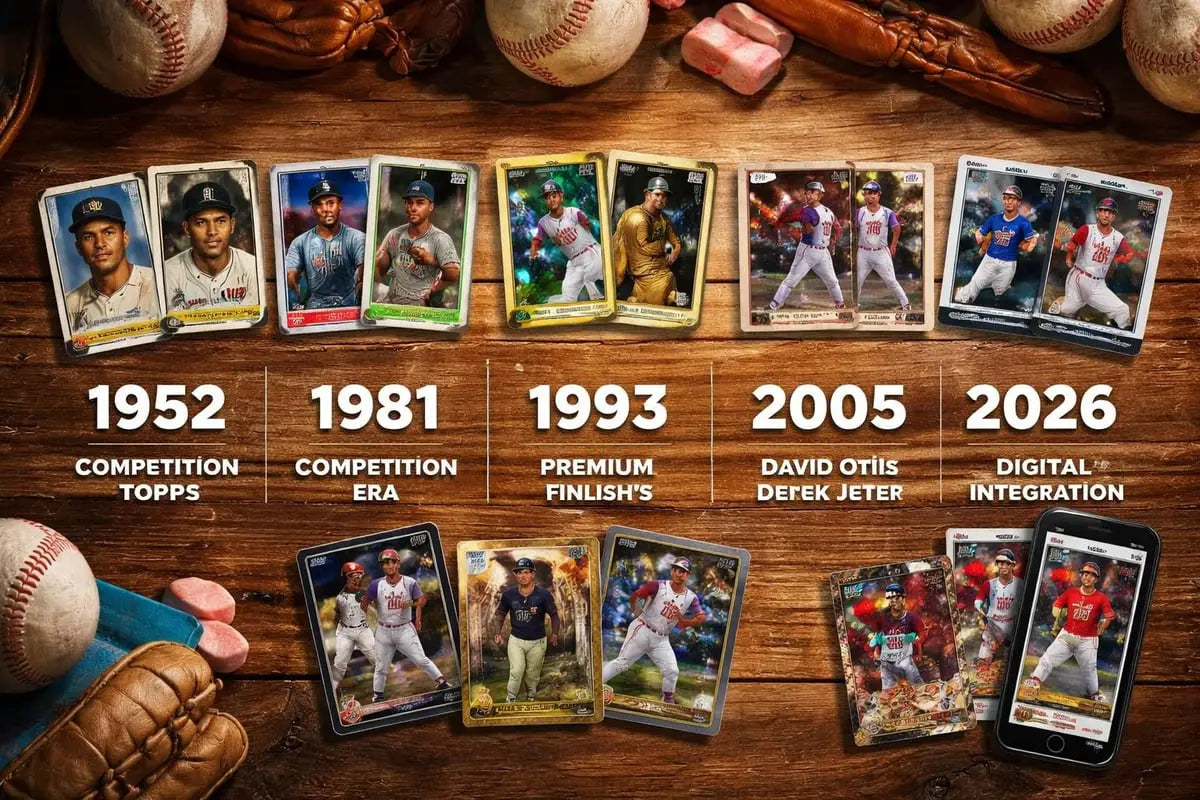
The journey of Topps as a company began in 1938, but their baseball card dominance truly started in 1951. By 1952, Topps had revolutionized the industry with their larger card format and full-color photography, setting standards that persist today. The company's strategic acquisition of exclusive contracts with major league players throughout the 1950s effectively created a monopoly that lasted for decades.
This exclusivity allowed Topps to shape how generations experienced baseball beyond the stadium. Each spring release became a cultural event, with children and adults alike tearing open wax packs hoping to find their favorite players. The consistent annual production created a chronological archive of baseball history, documenting roster changes, team relocations, and evolving uniform designs.
Breaking the Monopoly and Industry Competition
The landscape shifted dramatically in 1981 when Fleer and Donruss successfully challenged Topps' exclusive licensing agreements. This legal breakthrough introduced competition that ultimately benefited collectors through innovative designs and specialized products. However, Topps maintained its position as the industry leader through superior photography, comprehensive player rosters, and established brand loyalty.
Throughout the 1980s and 1990s, the baseball card market experienced unprecedented growth. Topps responded by introducing premium product lines including Topps Traded sets, Topps Stadium Club, and Topps Chrome, each targeting different collector segments with varying price points and card qualities.
Understanding Value Factors in Topps Baseball Cards
Multiple elements determine the market value of topps baseball cards, creating a complex ecosystem that rewards knowledge and research. Player performance remains the most obvious factor-cards featuring Hall of Famers, MVP winners, and championship teams consistently command premium prices. However, several other critical considerations influence pricing.
Condition and Professional Grading
Card condition dramatically impacts value, often representing the difference between hundreds and thousands of dollars for the same card. Professional grading services like PSA and BGS evaluate cards on a numeric scale, with grades of 9 or 10 (gem mint) achieving exponential price premiums over lower grades.
Key Condition Factors:
- Corner sharpness and wear
- Surface scratches or print defects
- Centering of the image within borders
- Edge quality and color consistency
| Grade Level | Condition | Value Impact |
|---|---|---|
| PSA 10 | Gem Mint | 300-500% premium |
| PSA 9 | Mint | 100-200% premium |
| PSA 8 | Near Mint | 50-100% premium |
| PSA 7 | Near Mint | Base value |
| PSA 6 or below | Various defects | 30-60% of base |
Vintage topps baseball cards from the 1950s through 1970s particularly benefit from professional grading, as finding examples in pristine condition becomes increasingly rare. Even common players can achieve surprising values when preserved in top grades.
Rarity and Special Editions
Scarcity drives demand across all collectibles markets. Topps has masterfully created various levels of rarity through limited print runs, short prints, autographed cards, and exclusive parallel versions. Understanding these production variations helps collectors identify potential investment opportunities.
Modern Topps releases include numerous parallel versions of base cards, each with different print quantities:
- Base cards: unlimited production
- Chrome refractors: limited quantities
- Numbered parallels: typically 50-500 copies
- One-of-one superfractors: ultimate rarity
The most valuable Topps baseball cards combine multiple desirable attributes-legendary players, rookie card status, pristine condition, and historical significance. Recent sales demonstrate the continued strength of vintage Topps products at auction.
Navigating Modern Topps Baseball Card Products
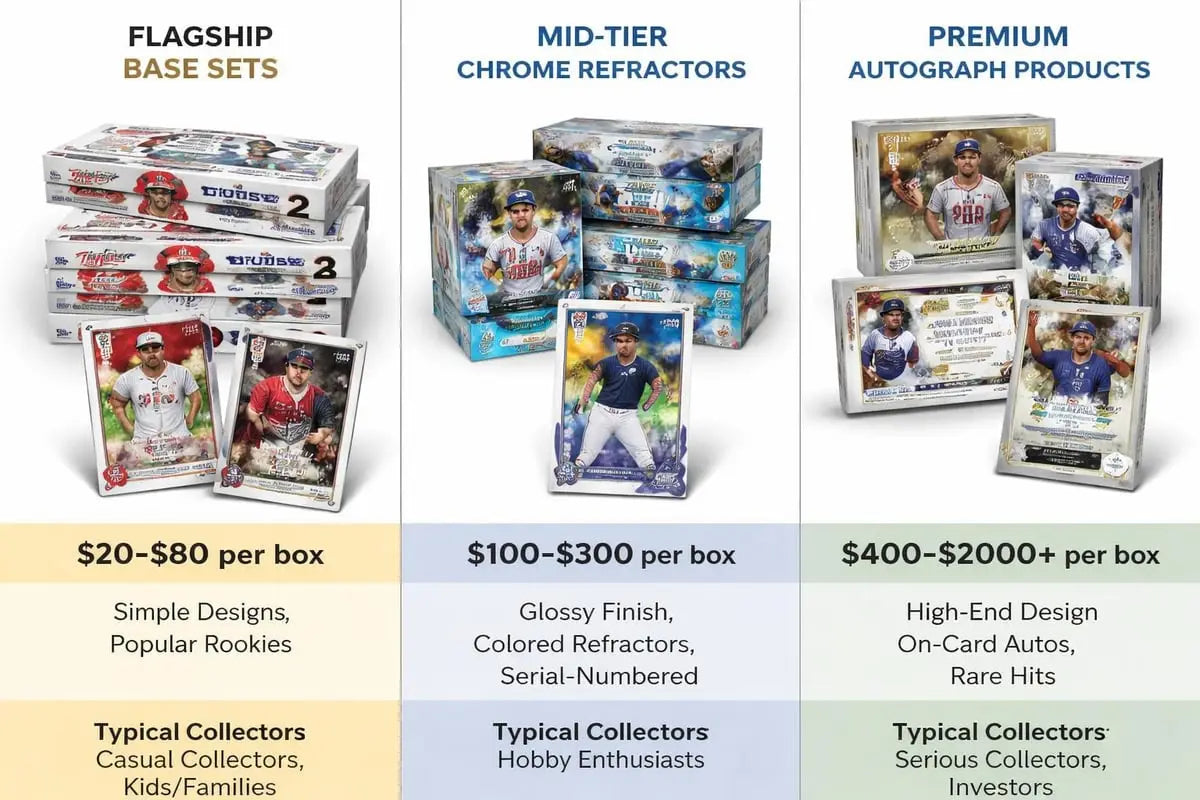
Today's Topps lineup offers collectors an overwhelming array of choices, from budget-friendly blaster boxes to premium hobby cases costing thousands of dollars. Each product tier targets specific collecting goals and budgets, making strategic product selection essential for maximizing enjoyment and potential returns.
Flagship Series and Annual Releases
The annual Topps Series 1 and Series 2 releases remain the backbone of the company's offerings. Released each February and May respectively, these sets feature comprehensive player checklists, rookie cards, and special insert sets. These flagship products provide accessible entry points for new collectors while maintaining appeal for veterans seeking complete sets.
Topps Heritage recreates vintage designs from past decades, satisfying nostalgia while incorporating modern players. This annual release appeals to collectors who appreciate classic aesthetics combined with contemporary roster updates. Similarly, Topps Archives draws inspiration from multiple historical designs within single products.
Premium and Specialty Products
Higher-end Topps products deliver guaranteed autographs, memorabilia cards, and premium card stock. Topps Chrome, released annually in late summer, features distinctive refractor technology that creates rainbow-like finishes. These cards have become particularly popular with modern collectors and consistently perform well in secondary markets.
Popular Premium Topps Products:
- Topps Chrome (refractor technology)
- Topps Tribute (on-card autographs)
- Topps Dynasty (ultra-premium patches)
- Topps Sterling (manufactured patches)
- Topps Five Star (luxury presentation)
Topps Now represents the company's innovative response to digital-age collecting. These cards celebrate specific achievements or moments within days of occurring, with sales windows lasting only 24-48 hours. Limited print runs based on actual orders create instant scarcity for noteworthy performances. Collectors at TradingCardsMarketplace can find various Topps Now releases featuring memorable moments from recent seasons.
Identifying Valuable Rookie Cards and Investment Potential
Rookie cards represent the holy grail for baseball card collectors, capturing players at the beginning of their professional journeys. Topps rookie cards feature special "RC" designations, helping collectors identify first-year cards within larger sets. However, not all rookie cards achieve significant value-player performance and career longevity ultimately determine long-term demand.
Evaluating Rookie Card Investment Opportunities
Smart collectors research player statistics, scouting reports, and industry trends before committing significant capital to modern rookies. While vintage rookies like the 1952 Mickey Mantle or 1963 Pete Rose have proven their worth over decades, contemporary prospects carry considerably more risk.
Consider these factors when evaluating modern topps baseball cards featuring rookies:
- Major award potential: Rookie of the Year candidates generate immediate demand
- Team marketability: Large-market teams create more collector interest
- Position scarcity: Elite catchers and shortstops often command premiums
- Parallel availability: Limited parallels of promising rookies appreciate faster
- First-half performance: Strong starts create momentum in card prices
Recent examples demonstrate both spectacular successes and cautionary tales in rookie card speculation. The unprecedented demand for unique cards like the rare Paul Skenes card reflects how special rookie cards can achieve remarkable values when multiple factors align perfectly.
Understanding Market Cycles and Timing
Baseball card values fluctuate based on player performance, hobby trends, and broader economic conditions. Savvy collectors recognize that timing purchases during off-seasons or market corrections can yield better long-term returns than chasing hot rookies at peak prices.
The phenomenon of unexpected cards becoming valuable demonstrates how cultural moments can create demand beyond traditional sports performance metrics. This unpredictability adds both excitement and risk to collecting strategies.
Building a Strategic Topps Baseball Card Collection
Successful collecting requires clear objectives and disciplined execution. Whether pursuing complete sets, focusing on specific teams or players, or seeking investment returns, establishing parameters helps guide purchasing decisions and prevents impulsive spending on temporary trends.
Set Building Versus Cherry Picking
Completing entire Topps sets appeals to collectors who enjoy the organizational challenge and comprehensive player coverage. Modern flagship sets contain 660-700 cards, requiring patience and systematic acquisition strategies. Set builders often purchase factory sets for base card needs, then focus on obtaining variations and inserts separately.
Alternatively, cherry-picking allows collectors to acquire only cards meeting specific criteria-star players, specific teams, or particular card designs. This approach typically requires lower financial investment while enabling deeper focus on quality over quantity.
Set Building Strategies:
| Approach | Cost | Time Investment | Completion Difficulty |
|---|---|---|---|
| Factory Sets | Low-Medium | Minimal | Easy (base only) |
| Pack/Box Opening | High | Moderate | Difficult |
| Secondary Singles | Medium | High | Moderate |
| Trading/Swapping | Low | Very High | Variable |
Collectors should also consider the extensive variety of trading cards available beyond just Topps when developing comprehensive collections, though Topps products remain the industry standard for baseball.
Storage and Preservation Best Practices
Proper storage protects investments and maintains card conditions for future enjoyment or resale. Topps baseball cards require protection from light, moisture, temperature fluctuations, and physical damage. Investing in quality storage supplies often proves worthwhile compared to potential value loss from deteriorating conditions.
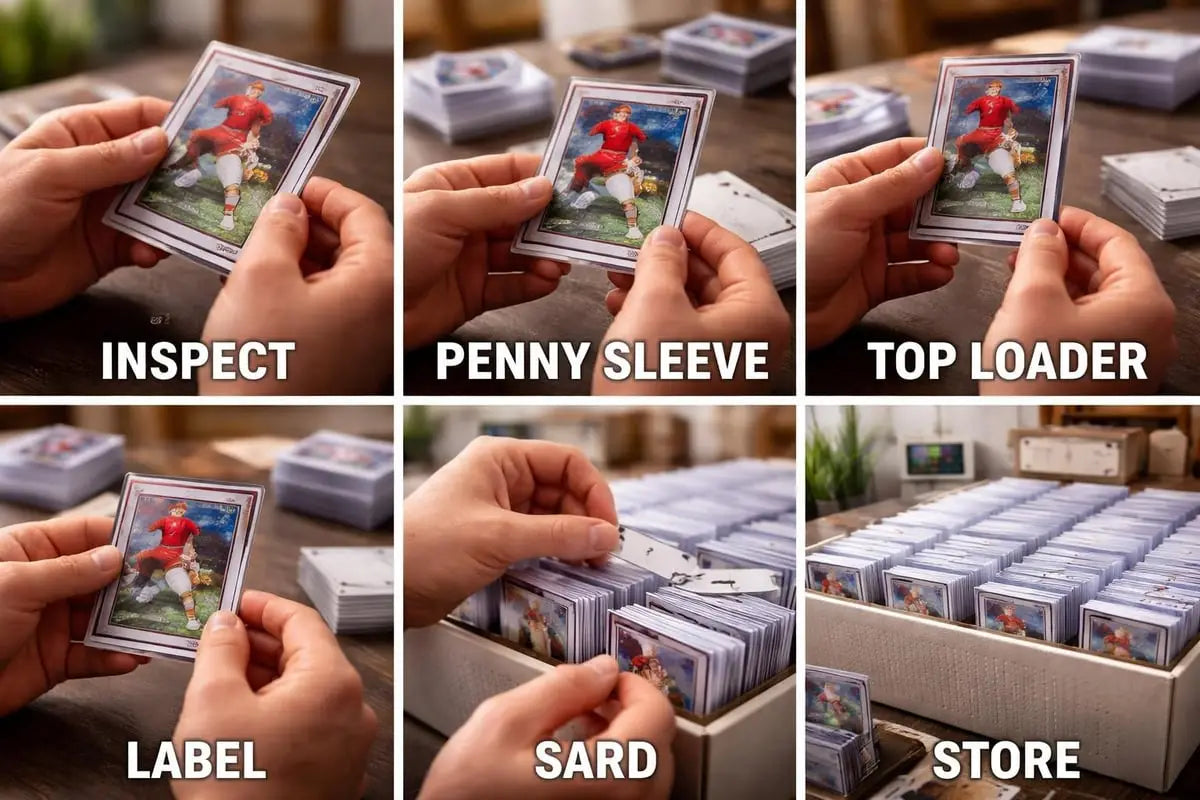
Essential storage supplies include penny sleeves for individual protection, top loaders for valuable singles, card boxes for bulk storage, and climate-controlled environments for long-term preservation. Cards stored in attics, basements, or garages face significant risks from environmental damage.
For particularly valuable topps baseball cards, professional grading provides both authentication and protective encapsulation. The grading process involves submitting cards to companies like PSA, BGS, or SGC, where experts evaluate condition and seal cards in tamper-evident holders displaying assigned grades.
Topps Expansion Beyond Traditional Baseball Cards
While baseball remains the company's flagship sport, Topps has successfully expanded into other markets and formats. Understanding these diversifications provides context for the company's future direction and potential collecting opportunities beyond traditional baseball products.
Digital Collecting and NFT Integration
The 2020s have witnessed Topps' aggressive push into digital collectibles through platforms like Topps BUNT and blockchain-based NFT products. These digital cards replicate the thrill of pack opening in virtual environments while introducing new features impossible with physical cards, including dynamic statistics and interactive elements.
Digital platforms lower entry barriers for younger collectors while creating global marketplaces unrestricted by geographic limitations. However, debates continue regarding the long-term value and collectibility of digital versus physical cards, with established collectors often preferring traditional formats.
Licensing Expansions and New Partnerships
Topps' licensing reach has extended beyond professional baseball into college sports, entertainment properties, and cultural phenomena. The NCAA's first NIL licensing deal with Topps opened opportunities for cards featuring college athletes, creating new collecting categories for fans following players from amateur through professional careers.
These expansions demonstrate Topps' adaptability in evolving markets while maintaining core competencies in card production and distribution. Collectors who diversify across multiple Topps product categories often discover synergies and cross-collecting opportunities.
Authentication and Avoiding Counterfeits
As values for vintage topps baseball cards have escalated, counterfeit production has unfortunately increased. Protecting yourself from fraudulent cards requires knowledge of authentication techniques and partnering with reputable dealers who guarantee product authenticity.
Common Counterfeiting Methods
Sophisticated counterfeiters employ various techniques including reprinting original designs on modern card stock, altering cheaper cards to appear more valuable, and creating completely fabricated cards mimicking rare variations. High-value vintage cards face the greatest counterfeiting risks due to potential profit margins.
Authentication Checkpoints:
- Card stock thickness and texture consistency
- Print quality and color accuracy
- Proper aging characteristics for vintage cards
- Correct back designs and statistical information
- Ultraviolet light reactions revealing modern materials
Working with established marketplaces that verify authenticity before listing products provides essential protection for significant purchases. Professional authentication services also offer opinions on questionable cards before completing expensive transactions.
Building Relationships with Trusted Dealers
Long-term collecting success often depends on developing relationships with knowledgeable dealers who prioritize customer satisfaction over short-term profits. Reputable sellers provide detailed condition descriptions, clear return policies, and transparent grading standards that build confidence in purchasing decisions.
Online platforms like TradingCardsMarketplace enable collectors to access diverse inventories while benefiting from buyer protections and seller accountability systems. Reading seller reviews and examining past transaction histories helps identify trustworthy sources for both common and rare topps baseball cards.
Market Trends and Future Outlook for Topps Collecting
The baseball card market has experienced dramatic fluctuations throughout its history, with recent years showing particular volatility. Understanding current trends and potential future developments helps collectors make informed decisions about acquisitions, sales, and long-term portfolio management.
Impact of Economic Conditions on Card Values
Like most collectibles markets, baseball card values demonstrate sensitivity to broader economic conditions. During economic expansions, discretionary spending on cards typically increases, while recessions often depress prices except for ultra-premium items that wealthy collectors continue pursuing regardless of economic conditions.
The COVID-19 pandemic paradoxically stimulated unprecedented growth in card collecting as people sought nostalgic hobbies during lockdowns. This surge created inflation across many card categories, particularly modern rookies and sealed wax boxes. Some prices have since corrected as markets normalized, though premium vintage cards have maintained strong values.
Technology's Role in Future Collecting
Emerging technologies continue reshaping how collectors acquire, evaluate, and enjoy topps baseball cards. Artificial intelligence tools now assist in card identification and value estimation. Blockchain technology enables verified ownership records and fractional investing in expensive cards. Virtual reality could eventually allow collectors to examine cards in immersive digital environments before purchasing.
These technological integrations will likely coexist with traditional collecting rather than replacing it entirely. The tangible nature of physical cards provides satisfaction that digital alternatives struggle to replicate fully, suggesting continued demand for traditional Topps products alongside digital innovations.
Grading Services and Value Enhancement
Professional grading has transformed the topps baseball cards market by introducing standardization and transparency to condition assessments. Understanding how grading works and when to utilize these services maximizes both protection and potential returns on valuable cards.
Choosing the Right Grading Service
Three major companies dominate the professional grading market: PSA (Professional Sports Authenticator), BGS (Beckett Grading Services), and SGC (Sportscard Guaranty). Each employs slightly different standards and pricing structures, with market preferences varying by card era and type.
PSA currently maintains the largest market share and generally achieves highest resale premiums, particularly for vintage cards. BGS offers subgrades that provide detailed condition breakdowns across four categories, appealing to modern card collectors seeking granular information. SGC has gained recent popularity for vintage grading with competitive pricing and quick turnaround times.
| Service | Best For | Typical Cost | Turnaround Time |
|---|---|---|---|
| PSA | Vintage & modern | $25-$150+ | 30-90 days |
| BGS | Modern premium cards | $20-$200+ | 20-60 days |
| SGC | Vintage budget cards | $20-$100+ | 15-45 days |
When Grading Makes Financial Sense
Not every card warrants the expense and delay of professional grading. Calculate potential value enhancement against grading costs and current raw card values before submitting. Generally, cards worth less than $100 in raw condition rarely justify standard grading fees unless they're borderline condition upgrades that could dramatically increase value.
Vintage topps baseball cards in excellent condition almost always benefit from grading, as authentication and preservation outweigh costs. Modern cards should only be graded when condition appears to be 9.5 or better, as lower grades often sell for less than raw card values after accounting for grading fees.
Selling Strategies for Topps Baseball Cards
Eventually, many collectors sell portions of their collections to fund upgrades, reduce inventory, or liquidate assets. Understanding various selling channels and optimization strategies ensures maximum returns when deciding to part with topps baseball cards.
Marketplace Selection and Fee Structures
Different selling platforms offer distinct advantages depending on card values, quantities, and seller experience levels. eBay provides maximum exposure to potential buyers but charges listing and final value fees totaling 12-15% of sales prices. Dedicated card marketplaces often feature lower fees but smaller buyer pools.
Selling Channel Comparison:
- eBay: Maximum exposure, highest fees, auction or fixed pricing
- COMC: Consignment service, moderate fees, passive selling
- Facebook Groups: Direct sales, minimal fees, requires reputation building
- Card Shows: Face-to-face transactions, table fees, immediate payment
- Local Card Shops: Quick liquidation, lowest prices received
High-value individual cards typically perform best through auction formats that create competitive bidding among serious collectors. Bulk common cards sell more efficiently through lots or collection sales rather than individual listings.
Timing Sales for Maximum Returns
Strategic timing significantly impacts realized prices for topps baseball cards. Selling during peak collecting seasons (spring training, playoff races) generally produces better results than off-season periods. Player performance also creates selling opportunities-moving cards of players experiencing hot streaks or career milestones before inevitable regressions.
Cards from recent products at TradingCardsMarketplace demonstrate how timing and market awareness influence pricing decisions. Monitoring completed sales and current listings provides valuable market intelligence for setting competitive prices that attract buyers while maximizing returns.
Topps baseball cards represent a unique intersection of sports fandom, historical preservation, and investment opportunity that has captivated collectors for generations. Whether you're drawn to vintage classics from the 1950s or contemporary rookies with autographs, understanding authentication, grading, market dynamics, and strategic collecting principles empowers you to build meaningful collections while minimizing risks. Ready to explore the exciting world of trading cards? Visit TradingCardsMarketplace to discover our curated selection of Topps products and start or enhance your collection today with confidence in our authenticity guarantees and competitive pricing.