

The decision to sell my baseball cards often comes after years of collecting, whether you've inherited a collection, need to downsize, or simply want to capitalize on the current market. Understanding the value of your collection and identifying the right selling channels can make the difference between leaving money on the table and maximizing your returns. The baseball card market has evolved significantly in recent years, with digital platforms, professional grading services, and online marketplaces transforming how collectors buy and sell. This comprehensive guide walks you through every step of the process, from initial evaluation to closing the sale.
Understanding Your Baseball Card Collection Value
Before you can successfully sell my baseball cards, you need to understand what you own and what it's worth. Not all cards are created equal, and factors like player popularity, card condition, rarity, and historical significance all play crucial roles in determining value.
Key Factors That Determine Card Value
The baseball card market responds to multiple variables that can dramatically impact pricing. Player performance remains the primary driver, with rookie cards of Hall of Famers commanding premium prices. Cards featuring legendary players like Mickey Mantle, Willie Mays, and modern stars like Mike Trout consistently attract serious buyers.
Card condition ranks as the second most critical factor. A card's grade can mean the difference between a $50 sale and a $5,000 transaction. Before you sell my baseball cards, examine each one carefully for:
- Corner sharpness and wear
- Surface scratches or print defects
- Centering quality
- Edge condition
- Overall cleanliness
Rarity and scarcity significantly influence market value. Limited print runs, error cards, and short-printed variations often fetch premium prices. Understanding recent market trends and statistics helps you position your cards competitively.
Professional Grading Considerations
Professional grading through services like PSA, BGS, or SGC can substantially increase your cards' marketability and value. However, grading costs money and time, so strategic decision-making is essential.
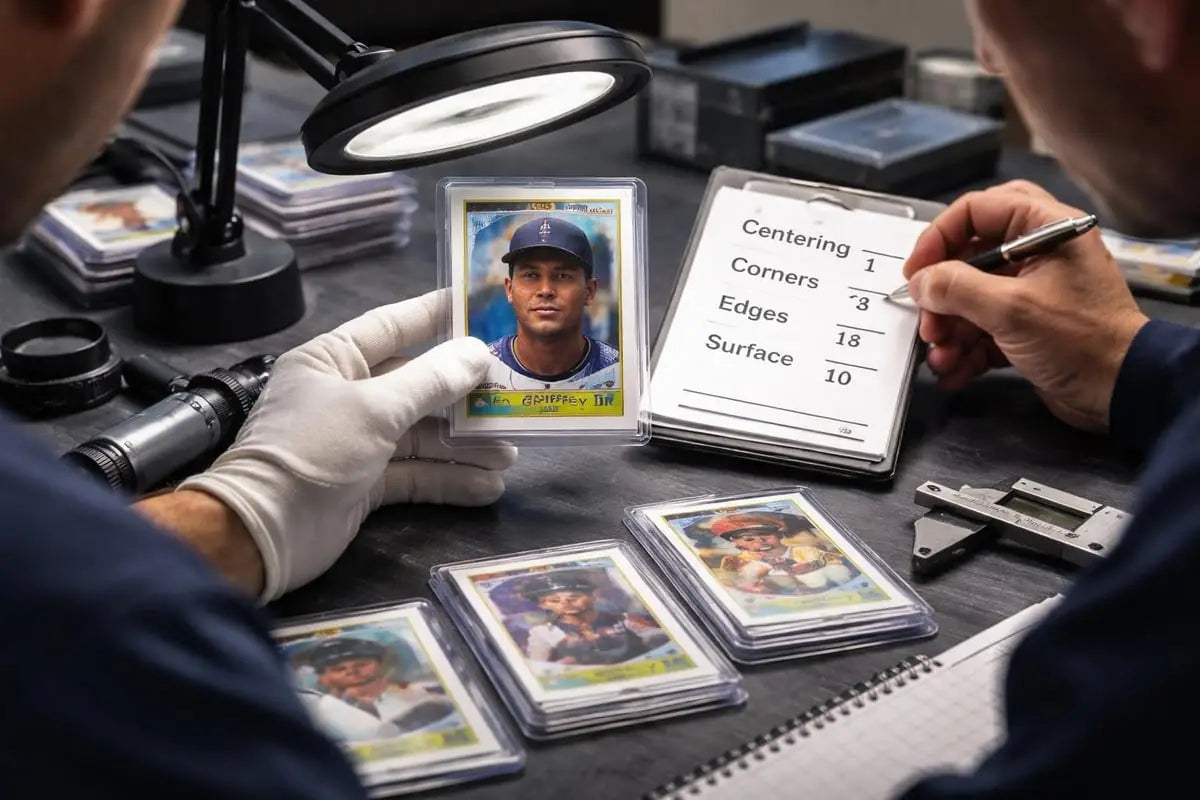
Cards worth less than $50 in raw condition rarely justify grading expenses. Focus your grading budget on:
- Pre-1980 cards in excellent condition
- Rookie cards of star players
- Cards with potential gem mint grades
- Vintage cards from iconic sets
The four essential steps before selling your baseball cards include researching values, organizing your collection, deciding on grading, and selecting appropriate selling venues.
Researching Current Market Prices
When preparing to sell my baseball cards, accurate pricing research prevents undervaluing your collection or pricing yourself out of the market. Multiple resources provide pricing guidance, each with distinct advantages.
Online Price Databases and Tools
Several platforms track real-time sales data rather than arbitrary price guides. eBay sold listings offer the most current market values, showing what buyers actually paid rather than asking prices. Filter for completed sales and match card condition carefully.
130 Point aggregates sales data across multiple platforms, providing comprehensive pricing information. PWCC Marketplace features high-end auction results, particularly useful for premium cards.
| Resource | Best For | Update Frequency |
|---|---|---|
| eBay Sold Listings | Current market values | Real-time |
| 130 Point | Comprehensive data | Daily |
| Beckett | Traditional pricing | Monthly |
| PWCC Marketplace | High-end cards | Auction-based |
Understanding Market Timing
The baseball card market experiences seasonal fluctuations and trend-based movements. According to January 2026 market reports, certain players and card types trend based on current season performance, playoff appearances, and Hall of Fame announcements.
Spring training and season starts typically drive increased interest. Playoff runs can temporarily boost specific player card values. Hall of Fame induction announcements create immediate demand spikes.
Choosing the Right Selling Platform
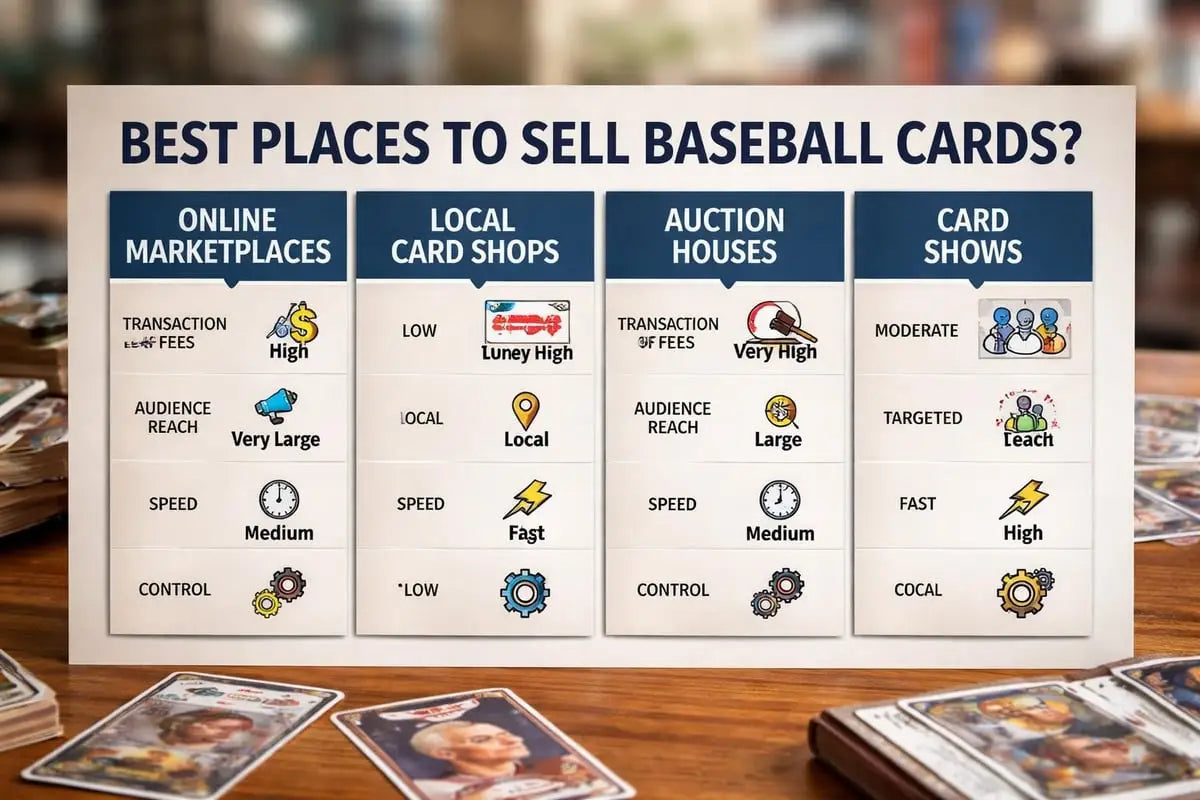
Deciding where to sell my baseball cards significantly impacts your final returns, time investment, and buyer reach. Each platform offers distinct advantages and trade-offs.
Online Marketplaces
eBay remains the largest marketplace for baseball cards, offering maximum exposure to potential buyers worldwide. The auction format works well for rare cards where competitive bidding drives prices higher. Fixed-price listings suit commons and moderately valuable cards.
Benefits include:
- Massive buyer audience
- Established trust systems
- Integrated payment processing
- Auction or fixed-price flexibility
TradingCardsMarketplace provides specialized focus on trading card collectibles, connecting serious collectors in a dedicated environment. Creating a seller profile allows you to build reputation and showcase your inventory professionally.
COMC (Check Out My Cards) offers consignment services, handling photography, listing creation, and shipping. While they take commission, they eliminate the hands-on work required to sell my baseball cards individually.
Local Options and Card Shows
Local card shops provide immediate payment but typically offer 40-60% of market value since they need profit margin for resale. This option works best when you prioritize speed over maximum returns.
Card shows connect you directly with collectors and dealers. Table rental costs money, but you keep full sale proceeds minus the rental fee. Shows work particularly well for mid-range collections where online selling would be time-prohibitive.
Auction Houses for Premium Collections
High-end collections warrant professional auction house involvement. Heritage Auctions, Goldin, and Robert Edward Auctions specialize in premium sports memorabilia and attract serious collectors willing to pay top dollar.
Auction houses typically require minimum consignment values and charge seller premiums of 10-20%, but their expert marketing and established collector networks often justify these costs for valuable collections.
Preparing Your Cards for Sale
Proper preparation maximizes appeal and protects your investment when you sell my baseball cards. Presentation quality directly correlates with final sale prices.
Photography Best Practices
Quality photographs are non-negotiable for online sales. Poor images suggest either card defects you're hiding or amateur selling that discourages serious buyers.
- Use natural lighting or professional photography lights
- Photograph cards in protective sleeves or holders
- Capture front and back images
- Show close-ups of any defects or notable features
- Maintain consistent backgrounds across listings
White or neutral backgrounds help cards stand out. Avoid cluttered settings that distract from the product. For graded cards, photograph the entire slab clearly showing the grade.
Packaging and Shipping Standards
Professional packaging protects your cards and builds buyer confidence. Cutting corners on shipping materials risks damage and negative feedback.
Standard shipping protocol includes:
- Penny sleeves for basic protection
- Top loaders for cards over $5
- Card savers or semi-rigid holders for cards being graded
- Team bags to prevent moisture damage
- Bubble mailers with cardboard reinforcement
- Tracking on all shipments over $20
Never use tape directly on cards or holders. Always ship within 24-48 hours of payment receipt to maintain positive seller ratings.
Maximizing Returns Through Strategic Selling
Smart selling strategies can significantly increase your total returns when you sell my baseball cards. Understanding buyer psychology and market dynamics gives you competitive advantages.
Lot vs. Individual Sales Strategy
Deciding whether to sell cards individually or in lots depends on card values and time availability. High-value cards ($50+) always merit individual listings to capture maximum value.
For common cards and lower-value items, lot sales save time while still generating returns. Theme your lots strategically:
- Team lots attract team collectors
- Player lots appeal to player collectors
- Set lots interest set builders
- Era lots (vintage, modern) target specific collector segments
Timing Your Listings
List auctions to end during peak browsing hours (Sunday evenings, 6-10 PM Eastern Time) when maximum bidders are active. Seven-day auctions provide optimal exposure without dragging on too long.
Fixed-price listings benefit from longer durations since they're not time-sensitive. The evolution of online baseball card sales has created year-round markets, but seasonal awareness still matters.
Pricing Strategy
For auctions, starting bids below market value encourages bidding activity. Multiple early bids trigger psychological competition among buyers. Reserve prices protect against undervaluation but can discourage participation.
Fixed-price listings should price competitively against similar offerings. Being the lowest-priced option in similar condition generates faster sales, while premium pricing requires justification through superior condition or unique characteristics.
Understanding Market Trends in 2026
The baseball card market continues evolving rapidly, with digital integration and premium grading trends reshaping how collectors buy and sell. Staying informed about current trends helps you position your collection advantageously.
Digital Transformation Impact
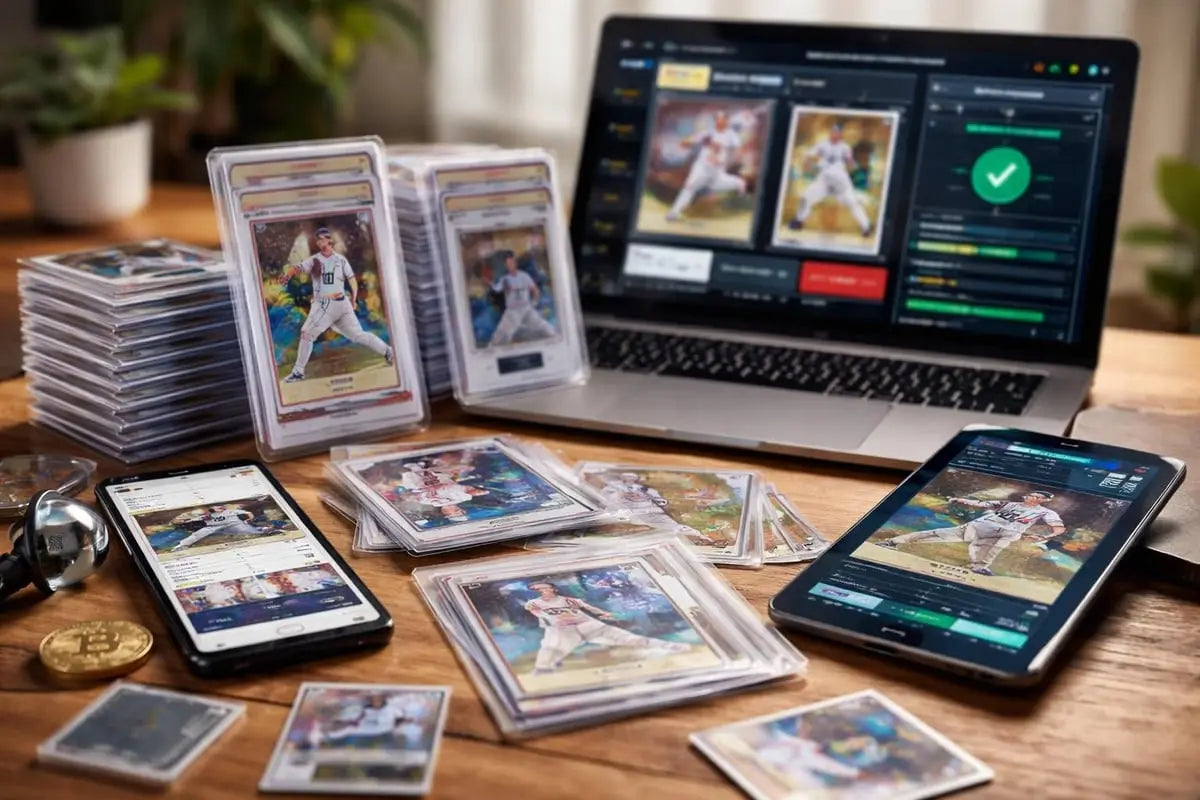
While physical cards remain the primary market, digital marketplaces and blockchain authentication are gaining traction. Understanding these trends helps you sell my baseball cards more effectively.
Online platforms now dominate sales, with recent data showing increasing digital marketplace adoption. Mobile apps, dedicated trading card sites, and social media groups expand buyer access beyond traditional channels.
Authentication technology incorporating blockchain and digital certificates helps verify card authenticity, particularly important for high-value vintage cards where counterfeits pose concerns.
Popular Card Categories in 2026
Certain card types consistently outperform others in current market conditions:
| Category | Market Strength | Best Selling Approach |
|---|---|---|
| Vintage Pre-1980 | Very Strong | Grading + Auction |
| Modern Rookies | Strong | Online Marketplace |
| Autographs | Strong | Authentication Required |
| Parallels/Inserts | Moderate | Individual Sales |
| Commons | Weak | Lot Sales Only |
Rookie cards of emerging stars experience the most volatility, with prices rising during hot streaks and falling during slumps. Vintage cards maintain more stable values, particularly Hall of Famers and iconic sets like 1952 Topps and 1955 Bowman.
Building Credibility as a Seller
When you sell my baseball cards online, reputation matters enormously. Buyers pay premium prices to established sellers with proven track records while avoiding unproven sellers despite lower prices.
Establishing Trust Quickly
New sellers face credibility challenges but can overcome them through strategic approaches:
- Start with lower-value items to build feedback
- Provide detailed, honest descriptions of card conditions
- Respond promptly to buyer questions
- Ship quickly with tracking information
- Offer returns to reduce buyer risk perception
At platforms like TradingCardsMarketplace, building a complete seller profile with detailed information about your collecting background and business practices establishes credibility faster than bare-bones profiles.
Communication Best Practices
Professional communication separates serious sellers from casual ones. Answer questions thoroughly within 24 hours. Provide additional photographs when requested. Be honest about flaws rather than hiding them.
After sales, send thank-you messages and request feedback. Most buyers reciprocate with positive feedback when treated professionally.
Handling Special Situations
Certain scenarios require specialized approaches when you sell my baseball cards. Understanding these situations prevents costly mistakes.
Inherited Collections
Inherited collections often contain unknown quantities and values. Take time to properly inventory and research before selling. Learning collector terminology and valuation methods proves essential for inherited collections.
Resist pressure to sell quickly to dealers offering immediate cash for entire collections. Their offers typically represent 30-50% of actual value. Investment of time researching and selling strategically usually doubles or triples returns.
Graded Card Sales
Selling graded cards requires different approaches than raw cards. Emphasize the grade prominently in titles and descriptions. Photograph slabs clearly showing certification numbers.
Price competitively against other examples in the same grade. A PSA 9 should price between PSA 8 and PSA 10 examples. Check PSA Population Reports to understand how common specific grades are for your cards.
High-Value Card Considerations
Cards worth thousands of dollars merit extra precautions:
- Consider professional authentication even if already graded
- Use insured shipping with signature confirmation
- Require payment through secure methods only
- Document everything with photographs and tracking
- Consider auction houses for five-figure cards
For extremely valuable cards, professional consignment to established auction houses often nets higher returns than individual sales despite commission costs.
Tax Implications and Record Keeping
Responsible sellers track their transactions for tax purposes. Baseball card sales may generate taxable income depending on circumstances.
Understanding Tax Obligations
Capital gains tax applies when you sell my baseball cards for more than their cost basis. If you inherited cards, the cost basis typically equals their fair market value at inheritance time. Cards purchased years ago use original purchase prices as cost basis.
Business income designation applies to sellers conducting regular, substantial sales activity. Casual sales of personal collections typically fall under capital gains treatment rather than business income.
Maintain records of:
- Purchase prices and dates
- Selling prices and dates
- Grading and authentication costs
- Shipping and selling fees
- Platform commissions
Consult tax professionals for specific guidance based on your situation and transaction volume.
Avoiding Common Selling Mistakes
Experience teaches expensive lessons, but learning from others' mistakes costs nothing. These common errors trip up sellers attempting to sell my baseball cards profitably.
Pricing Errors
Overpricing based on outdated price guides kills sales. Use recent sold prices, not asking prices or decade-old guidebooks. Underpricing rare cards because you don't recognize their significance leaves money on the table. Research thoroughly before pricing.
Description Deficiencies
Vague descriptions create buyer uncertainty. Specify exact card details:
- Year and brand (1989 Upper Deck, 2020 Topps Chrome)
- Card number and set information
- Specific parallel or insert designation
- Condition issues and grading assessment
- Authentication or grading certification details
Shipping Problems
Inadequate packaging damages cards and generates negative feedback. Delayed shipping frustrates buyers and violates marketplace policies. Use tracking always, insurance for valuable items, and ship promptly.
Customer Service Failures
Ignoring questions, refusing reasonable return requests, and responding defensively to issues all damage seller reputations. Professional customer service builds long-term success even when addressing complaints.
Scaling Your Selling Operations
Successfully selling smaller quantities often leads collectors to expand operations. Scaling from casual sales to serious selling requires operational adjustments.
Inventory Management
As volume increases, systematic inventory tracking becomes essential. Spreadsheets or specialized software help track:
- Card details and locations
- Purchase costs and dates
- Current market values
- Listing status and selling prices
- Buyer information and shipping dates
Order management tools streamline operations as transaction volume grows, helping you fulfill orders accurately and maintain customer satisfaction.
Sourcing Additional Inventory
Successful sellers often transition from selling personal collections to sourcing inventory strategically. Collection purchases, estate sales, and bulk buys from exiting collectors provide inventory for ongoing operations.
Build relationships with local collectors who may sell cards to you before listing publicly. Attend trading card shows to network with potential suppliers and understand what's moving in current markets.
Successfully navigating the process to sell my baseball cards requires understanding valuation factors, choosing appropriate selling platforms, presenting cards professionally, and building buyer trust through transparent communication. Whether you're liquidating an inherited collection or strategically selling duplicates to fund new acquisitions, the strategies outlined above maximize your returns while minimizing common pitfalls. TradingCardsMarketplace connects serious collectors with quality inventory and provides the platform tools needed to build successful, sustainable selling operations in today's dynamic baseball card market.


