

The Kobe Bryant rookie card market represents one of the most dynamic and valuable segments in sports card collecting. Since the legendary Lakers player entered the NBA in 1996, his rookie cards have consistently commanded premium prices, with rare variants reaching multi-million dollar valuations at auction. For collectors and investors alike, understanding the nuances of Bryant's rookie card market has become essential, particularly following his tragic passing in 2020, which sparked renewed interest and unprecedented price growth across his entire card portfolio. Whether you're a seasoned collector or just beginning your journey into basketball card investing, navigating the Kobe Bryant rookie card landscape requires knowledge of card variations, grading standards, and current market conditions.
Understanding Kobe Bryant's Rookie Card Landscape
The 1996-97 basketball card season produced multiple Kobe Bryant rookie cards across various manufacturers, each with distinct characteristics and value propositions. Unlike modern releases where a single manufacturer dominates, the mid-1990s featured numerous card companies producing licensed NBA products, creating a diverse rookie card portfolio for collectors.
Topps Chrome remains the most recognized and sought-after Kobe Bryant rookie card among collectors. The base version and its refractor parallel have established themselves as the cornerstone investments for Bryant enthusiasts. The card's clean design, quality printing, and chrome technology created a lasting appeal that has appreciated significantly over three decades.
Major Rookie Card Variations
The complete roster of Bryant's rookie cards includes offerings from Topps, Fleer, SkyBox, and several other manufacturers. Each brings different production qualities and scarcity levels to the market:
- 1996-97 Topps Chrome Base and Refractor
- 1996-97 Topps Chrome Precious Metal Gems (Green and Red)
- 1996-97 Fleer Metal Universe Precious Metal Gems
- 1996-97 Bowman's Best Refractor
- 1996-97 SkyBox E-X2000
- 1996-97 Flair Showcase Row 2
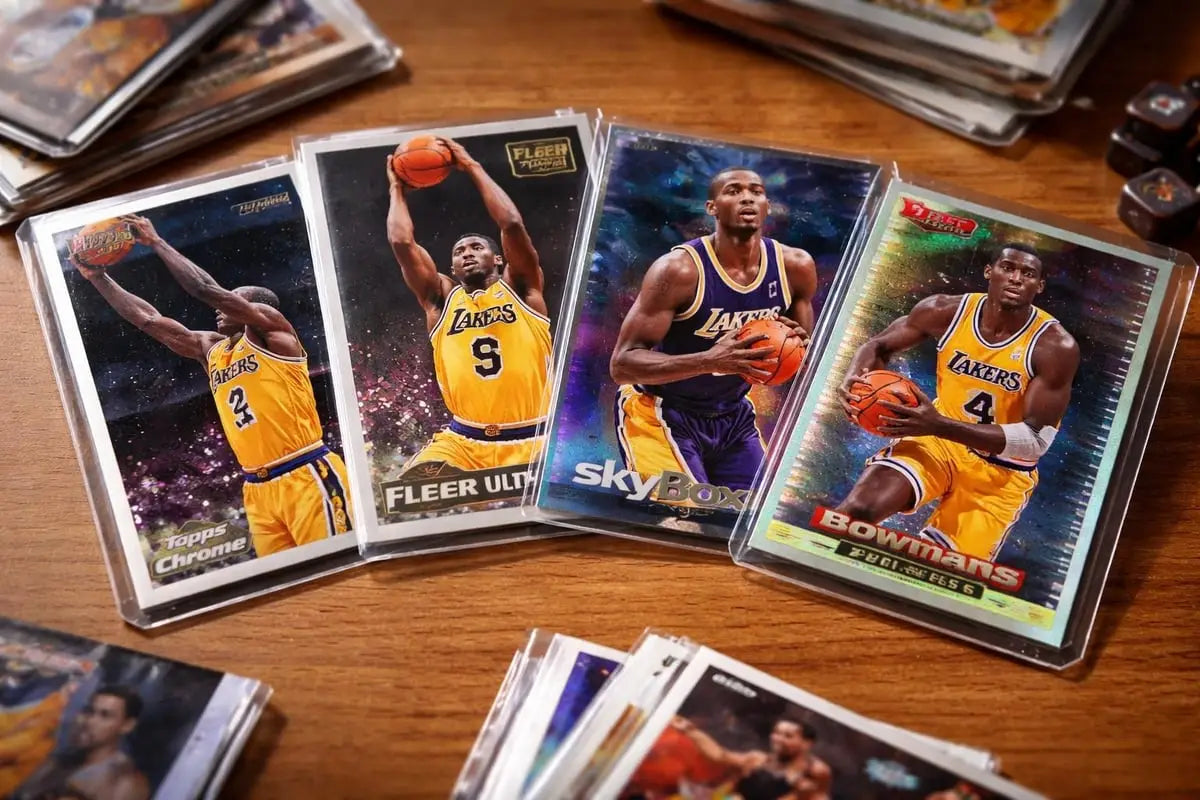
Production numbers vary dramatically across these releases. While standard base cards were printed in larger quantities, parallel versions and premium inserts command substantially higher prices due to their limited availability. The Precious Metal Gems variations, particularly the red version limited to just 10 copies, represent the absolute pinnacle of Bryant rookie card collecting.
Value Assessment and Price Ranges
Modern pricing for Kobe Bryant rookie cards spans from double digits for raw base cards to seven figures for pristine graded rarities. A pristine condition Topps Chrome Refractor sold for nearly $1.8 million at auction, establishing new benchmarks for basketball card values and demonstrating the premium collectors place on condition quality.
| Card Type | PSA 9 Range | PSA 10 Range | BGS 9.5 Range |
|---|---|---|---|
| Topps Chrome Base | $800-$1,500 | $4,000-$8,000 | $2,000-$4,000 |
| Topps Chrome Refractor | $8,000-$15,000 | $50,000-$100,000+ | $25,000-$60,000 |
| Bowman's Best Refractor | $3,000-$6,000 | $15,000-$30,000 | $8,000-$18,000 |
| Fleer Metal | $400-$800 | $2,000-$4,500 | $1,000-$2,500 |
These valuations reflect 2026 market conditions and can fluctuate based on auction results, market sentiment, and overall economic factors. Raw, ungraded cards typically sell for significantly less, though condition-sensitive collectors may discount them by 50-70% compared to graded equivalents.
Record-Breaking Sales
The upper echelon of Kobe Bryant rookie card sales has reshaped expectations for basketball memorabilia values. The sale of a rare Kobe Bryant rookie card for nearly $1.8 million demonstrated how emotional connection, historical significance, and scarcity converge to create exceptional market outcomes.
Beyond the headline-grabbing seven-figure sales, consistent five-figure and six-figure transactions occur regularly in the hobby. These sustained high-value sales indicate genuine collector demand rather than speculative bubble behavior, though prudent investors always maintain awareness of market cycles.
Grading Considerations for Maximum Value
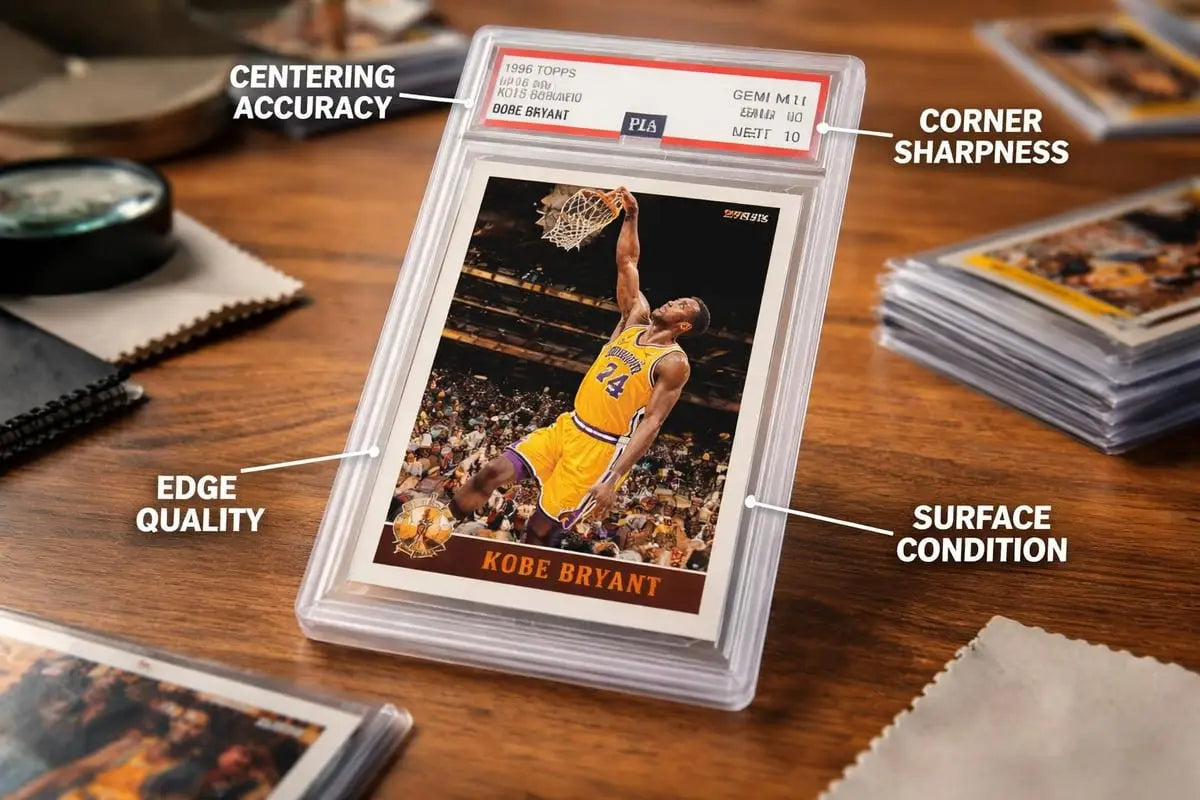
Professional grading dramatically impacts Kobe Bryant rookie card values, with the difference between a PSA 9 and PSA 10 often representing multiples of value rather than incremental increases. Centering, corners, edges, and surface quality all factor into final grades, with vintage chrome cards particularly susceptible to surface imperfections and edge wear.
PSA (Professional Sports Authenticator) and BGS (Beckett Grading Services) dominate the basketball card grading market. Each employs distinct grading standards and holder designs that influence secondary market perception and pricing.
When to Grade Your Cards
Consider professional grading when:
- The card appears to be in exceptional condition with minimal visible flaws
- You plan to sell and want to maximize value through third-party authentication
- The card has significant monetary value exceeding several hundred dollars
- You want long-term protection in a sealed, archival-quality holder
- Market conditions favor grading with reasonable turnaround times and costs
Raw cards maintain flexibility for personal collection enjoyment and avoid grading fees, which can range from $20 to $300+ depending on service level and declared value. For budget-conscious collectors building comprehensive basketball team collections, grading every card becomes cost-prohibitive and unnecessary.
Investment Potential and Market Trends
The Kobe Bryant rookie card market has demonstrated remarkable resilience and growth since 2020. While all sports cards experienced increased interest during pandemic-driven hobby expansion, Bryant's cards maintained momentum even as broader market corrections occurred in 2022-2023.
Long-term appreciation for top-tier Bryant rookies has exceeded traditional investment vehicles. A PSA 10 Topps Chrome Refractor purchased for $15,000 in 2015 could reasonably command $75,000-$100,000 in 2026, representing annual returns that outpace most conventional assets. However, past performance never guarantees future results in collectibles markets.
Factors Driving Value
Multiple elements contribute to sustained demand for Kobe Bryant rookie cards:
- Legacy status as one of basketball's all-time greatest players
- Generational nostalgia from fans who watched his career
- Limited supply of high-grade examples
- Celebrity and athlete collecting bringing new capital into the market
- Fractional ownership platforms enabling broader participation
Comprehensive market analysis and valuation trends indicate that established Hall of Fame players with cultural impact maintain value better than short-career athletes or purely statistical performers. Bryant's influence transcended statistics, creating emotional connections that translate into collecting premiums.
Authentication and Counterfeit Awareness
As values escalate, counterfeit risk increases proportionally. Sophisticated forgeries targeting high-value Kobe Bryant rookie cards circulate in the marketplace, making authentication knowledge essential for serious collectors.
| Authenticity Check | What to Examine | Red Flags |
|---|---|---|
| Printing Quality | Dot pattern, color saturation | Blurry text, incorrect colors |
| Card Stock | Thickness, flexibility | Too thick or thin |
| Chrome Finish | Reflectivity, consistency | Dull or uneven coating |
| Centering | Border measurements | Dramatic asymmetry |
Purchase from reputable sources whenever possible, particularly for significant investments. Established auction houses, verified sellers on major platforms, and brick-and-mortar card shops with strong reputations minimize counterfeit exposure. At TradingCardsMarketplace, authentication standards ensure buyer confidence across all transactions.
Third-Party Authentication Benefits
Beyond grading, professional authentication services verify card legitimacy before encapsulation. This process includes:
- Comparison against known authentic examples using reference databases
- Microscopic examination of printing characteristics
- Ultraviolet light testing for paper and ink consistency
- Weight and dimension verification against manufacturing specifications
Even experienced collectors occasionally encounter sophisticated counterfeits. The modest cost of professional authentication provides invaluable protection against financial loss and collection contamination.
Building a Kobe Bryant Collection Strategy
Successful collecting requires clear objectives aligned with budget realities and personal enjoyment factors. Some collectors pursue complete rainbow sets across all manufacturers, while others focus exclusively on PSA 10 examples of their favorite designs.
Budget-friendly approaches might emphasize base cards in PSA 8 or 9 condition, providing authentic rookie card ownership without five-figure investments. These still represent legitimate Bryant rookies with reasonable appreciation potential and genuine collectible value.
Portfolio Diversification
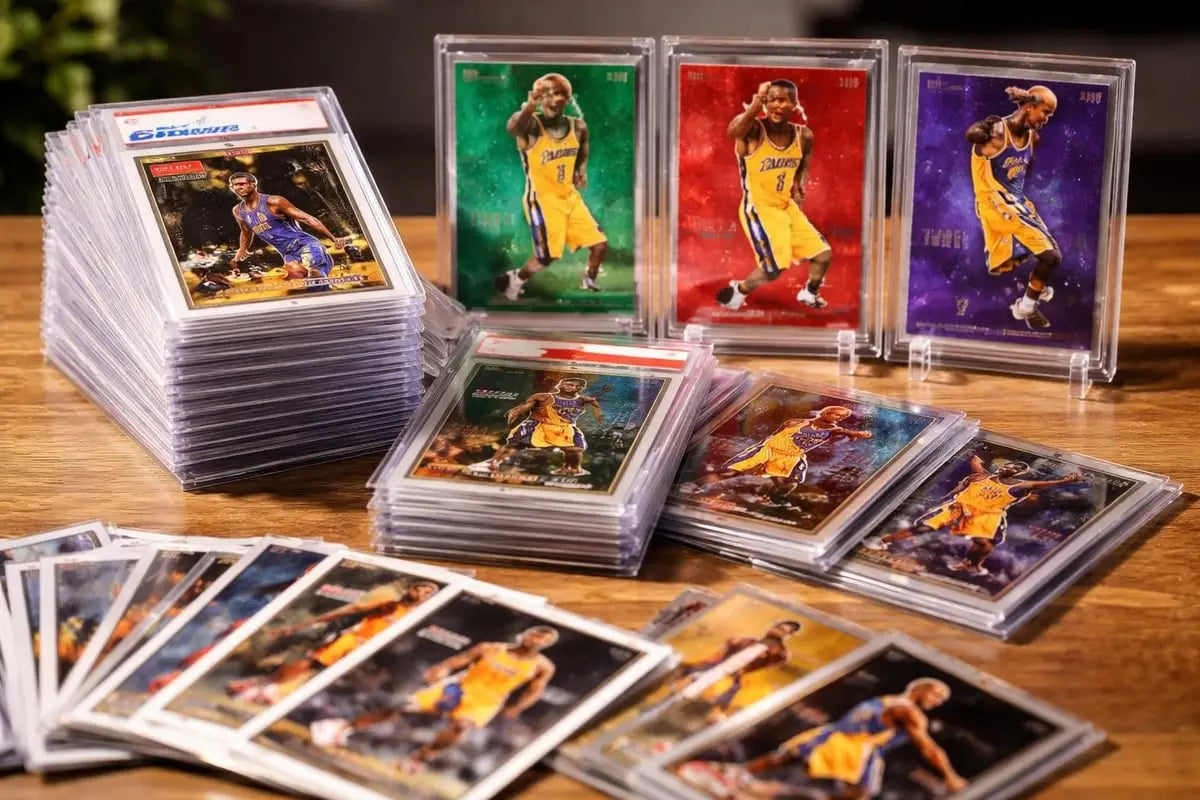
Rather than concentrating resources in a single card, consider spreading investments across:
- Multiple card manufacturers to capture different design aesthetics
- Various grade levels balancing affordability with quality
- Base and parallel versions offering different risk-reward profiles
- Rookie and second-year cards for expanded Bryant representation
This approach reduces concentration risk while enabling broader collection development. Similar strategies work effectively across other collecting categories, whether building comprehensive team sets or diversifying into complementary sports.
Selling and Liquidity Considerations
Understanding eventual sale mechanics benefits collectors planning long-term holdings. The Kobe Bryant rookie card market offers multiple liquidation channels, each with distinct advantages and considerations.
Auction houses provide maximum exposure for premium cards, particularly PSA 10 examples or rare parallels. Commission structures typically range from 10-20%, with buyer's premiums adding additional costs that impact final realized prices. Major auction events generate competitive bidding that can exceed private sale expectations.
Alternative Sales Channels
Private sales through collector networks eliminate intermediary fees but require trusted relationships and negotiation skills. Online marketplaces offer convenience with varied fee structures and buyer protection mechanisms.
For sellers managing extensive collections, consignment arrangements with established dealers provide expertise in pricing, marketing, and transaction management. These professionals understand market timing and buyer psychology, often achieving results that justify their commission percentages.
Storage and Preservation Best Practices
Maintaining card condition directly impacts long-term value retention. Improper storage can degrade even professionally graded cards over extended periods, making preservation knowledge essential for serious collectors.
Climate-controlled environments protect against humidity fluctuations and temperature extremes that cause warping, discoloration, and other condition issues. Target conditions include 65-70°F temperature and 40-50% relative humidity.
Professional grading holders provide excellent protection but aren't indestructible. Store slabbed cards upright in dedicated boxes or display cases, avoiding direct sunlight exposure that can fade holders and labels over time. Raw cards require penny sleeves, top loaders, and protective storage boxes for optimal preservation.
Insurance Considerations
As collection values grow, standard homeowner's or renter's insurance may provide insufficient coverage for card collections. Specialized collectibles insurance policies offer:
- Agreed value coverage without depreciation
- Worldwide protection including travel and shows
- No deductibles on many policies
- Restoration cost coverage for damaged cards
Document your collection thoroughly with photographs, purchase receipts, and grading certificates. This documentation streamlines claims processing and establishes ownership verification for insurance purposes.
Future Outlook for Bryant's Rookie Cards
Predicting collectibles markets involves substantial uncertainty, but several indicators suggest sustained strength for premium Kobe Bryant rookie cards. Hall of Fame players with cultural significance and tragic early deaths historically maintain collector interest across generations.
New collectors entering the hobby bring fresh demand, while established investors view top-tier cards as alternative assets within diversified portfolios. Market analysis of basketball card trends indicates that iconic players from the 1990s maintain strong performance metrics compared to more recent rookie classes.
Generational wealth transfer represents another long-term demand driver. As millennials who grew up watching Bryant's career inherit assets and develop collecting budgets, nostalgia-driven purchasing may accelerate. This demographic shift has already influenced pricing across vintage cards from the 1980s-1990s era.
Risk Factors to Monitor
Prudent collectors acknowledge potential headwinds:
- Economic recessions reducing discretionary spending on collectibles
- Hobby market corrections following speculative peaks
- Authentication controversies eroding confidence in specific cards
- Shifting cultural interests away from traditional sports cards
These risks don't negate Bryant's long-term collectibility but warrant consideration within balanced collection strategies. Diversification across players, sports, and price points mitigates concentration risk while maintaining hobby enjoyment.
Comparing Bryant to Other Basketball Rookies
Context within the broader basketball card market helps establish realistic value expectations. Michael Jordan rookie cards command substantially higher prices than Bryant's, reflecting Jordan's earlier career, different market dynamics during his playing years, and arguably greater cultural impact.
LeBron James rookie cards represent another relevant comparison, with his 2003-04 releases showing strong performance but different characteristics than 1996-97 offerings. Modern printing technology and production decisions create distinct supply dynamics that influence relative pricing.
| Player | Flagship Rookie | PSA 10 Typical Value | Market Depth |
|---|---|---|---|
| Michael Jordan | 1986-87 Fleer | $300,000-$500,000+ | Strong |
| Kobe Bryant | 1996-97 Topps Chrome | $4,000-$8,000 | Very Strong |
| LeBron James | 2003-04 Topps Chrome | $3,000-$6,000 | Strong |
| Luka Dončić | 2018-19 Prizm | $1,500-$3,000 | Developing |
These comparisons illustrate Bryant's position within basketball card hierarchy while demonstrating that each player's market operates with unique dynamics. Collection decisions should reflect personal preferences alongside investment considerations.
The Kobe Bryant rookie card market offers compelling opportunities for collectors seeking iconic basketball memorabilia with genuine appreciation potential. Understanding card variations, condition importance, and authentication standards empowers informed purchasing decisions across all budget levels. Whether you're pursuing museum-quality PSA 10 specimens or building affordable base card collections, TradingCardsMarketplace provides the trusted marketplace and expert guidance needed to navigate this dynamic collecting category successfully.


