Collecting baseball cards represents a significant investment of both time and money, making proper storage essential for protecting your collection's value and condition. A baseball card binder offers collectors an accessible, organized solution that balances protection with the ability to browse and enjoy their cards regularly. Unlike sealed boxes or rigid cases, binders provide the flexibility to reorganize, showcase, and protect cards while maintaining easy access to your collection. Understanding how to select, use, and maintain a quality binder system can mean the difference between preserving pristine cards and watching their condition deteriorate over time.
Understanding Baseball Card Binder Systems
The modern baseball card binder has evolved significantly from simple three-ring options of decades past. Today's collectors have access to specialized storage solutions designed specifically for card protection and organization.
Types of Binder Configurations
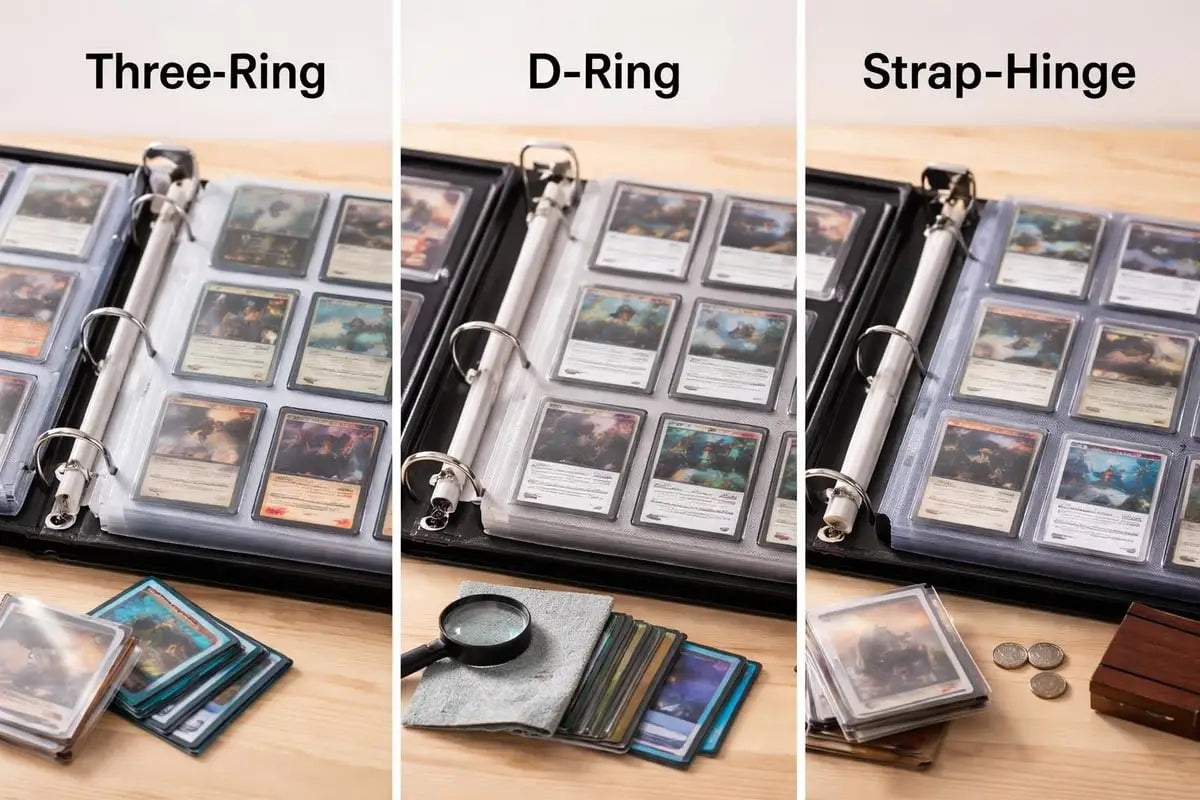
Baseball card binders come in several configurations, each suited to different collection sizes and organizational preferences:
- Standard three-ring binders with card pages that insert into metal rings
- D-ring binders that prevent page bending and allow smoother page turning
- Strap-hinge binders that eliminate metal rings entirely for maximum page flatness
- Zipper binders offering additional protection against dust and accidental spills
- Side-loading binders designed specifically for trading card storage
The three-ring format remains popular due to wide availability and affordability, though serious collectors often prefer D-ring or strap-hinge designs. These alternative configurations reduce stress on card pages, preventing the warping that can occur when pages hang from traditional rings.
Page Quality and Material Considerations
The pages you insert into your baseball card binder matter just as much as the binder itself. High-quality sleeves and proper storage environments prevent damage and maintain card condition over decades.
Polypropylene pages represent the gold standard for card storage. This archival-safe material contains no PVC, which can damage cards over time through chemical interaction. When selecting pages, verify they're labeled acid-free and PVC-free.
| Page Type | Material | Card Capacity | Best For |
|---|---|---|---|
| 9-pocket | Polypropylene | 9 standard cards | Base sets, commons |
| 4-pocket | Polypropylene | 4 cards per page | Larger cards, showcases |
| 1-pocket | Polypropylene | 1 card per page | Valuable singles, rookies |
| Ultra-Pro Platinum | Premium poly | 9 cards | High-value collections |
Premium pages feature reinforced edges, stronger backing, and superior clarity. While they cost more initially, they provide better protection for valuable cards.
Organizing Your Collection Effectively
A well-organized baseball card binder transforms a random assortment into a manageable, enjoyable collection. Organizing by set and year or by player helps collectors efficiently manage their collections.
Organization Methods That Work
Different collectors prefer different organizational approaches based on their collecting goals and collection composition:
- Chronological organization arranging cards by year and set
- Team-based sorting grouping all cards by franchise
- Player collections dedicating sections to favorite players
- Set completion organizing complete sets together
- Value-based arrangement separating high-value cards from base cards
Chronological organization works exceptionally well for collectors who focus on specific eras or who enjoy tracking player progression year by year. This method allows you to see how card designs, photography, and production quality evolved.
Creating a Logical System
Start your organizational system by determining your primary collecting focus. If you're building complete sets, dedicate individual binders to specific years or manufacturers. Set collectors benefit from clearly labeled binder spines indicating the set name and year.
Player collectors should consider alphabetical arrangement within team groupings. This dual-layer organization makes locating specific cards intuitive while maintaining logical flow. Use tabbed dividers to mark alphabetical breaks or team changes.
For collections spanning multiple decades, consider separating vintage cards (typically pre-1980) from modern issues. Vintage cards often require more careful handling and benefit from premium page protection, justifying separate storage.
Protection and Preservation Best Practices
Proper protection extends beyond simply placing cards in a baseball card binder. Preventing damage during storage and display requires attention to handling techniques, environmental factors, and material quality.
Environmental Storage Conditions
Baseball cards are sensitive to temperature fluctuations, humidity, and light exposure. Store your binders in climate-controlled environments where temperature remains between 65-70°F and relative humidity stays between 35-50%.
- Avoid basements prone to flooding or moisture
- Keep binders away from direct sunlight
- Never store binders in attics with extreme temperature swings
- Use dehumidifiers in humid climates
- Maintain consistent environmental conditions year-round
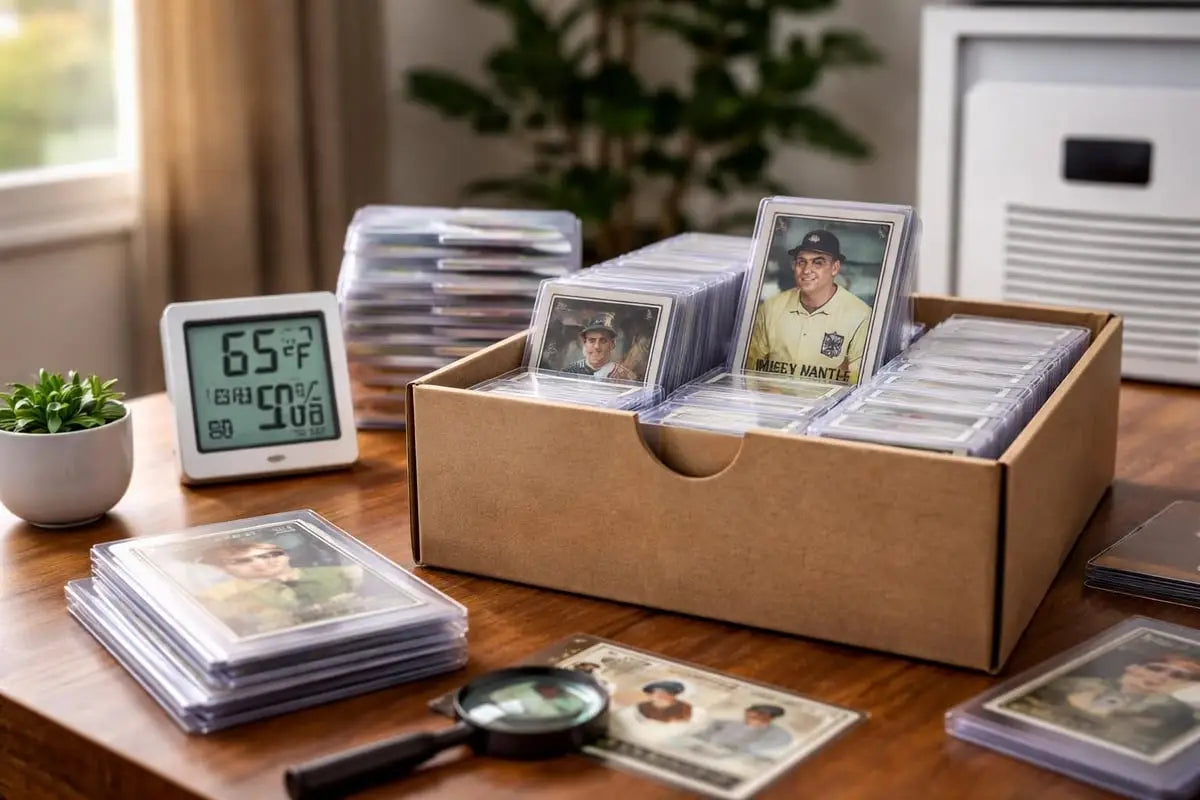
Light exposure causes fading and deterioration of card surfaces. Even indirect sunlight gradually damages cards over months and years. Store binders in closed cabinets or on shelves away from windows.
Handling Techniques for Long-Term Preservation
How you handle cards when inserting them into or removing them from your baseball card binder directly impacts their condition:
- Always handle cards by their edges, never touching the surface
- Wash and dry hands thoroughly before handling valuable cards
- Work over a clean, soft surface to prevent accidental drops
- Never force cards into tight sleeves - use properly sized pages
- Insert cards carefully to avoid corner bending or surface scratching
High-value cards deserve additional protection before binder storage. Place individual cards in penny sleeves, then insert the sleeved card into binder pages. This double-layer protection guards against page imperfections and provides additional surface protection.
Selecting the Right Binder for Your Needs
Not all baseball card binders suit every collection type or collector preference. Matching binder features to your specific needs maximizes both protection and usability.
Capacity and Size Considerations
Standard binders hold between 100 and 400 cards depending on page configuration and total page count. Calculate your current collection size and anticipated growth before purchasing.
Small collections (under 500 cards) work well in single binders with 25-50 pages. This keeps everything accessible without becoming unwieldy. As collections grow, splitting into multiple themed binders prevents any single binder from becoming too heavy or difficult to handle.
Binder dimensions matter for storage space. Standard 3-inch D-ring binders typically hold around 360 cards in 9-pocket pages. Larger 4-inch or 5-inch binders accommodate more pages but become heavy and difficult to handle when full.
Material Quality and Durability
The external binder material determines longevity and protection level. Options include:
| Material | Durability | Protection Level | Price Range |
|---|---|---|---|
| Cardboard | Low | Minimal | $ |
| Vinyl | Medium | Good | $$ |
| Leather | High | Excellent | $$$$ |
| Hard plastic | High | Very Good | $$$ |
Vinyl binders offer the best value for most collectors, providing adequate protection at reasonable prices. Hard plastic binders excel in high-traffic situations or when transporting collections to trading card collectibles shows.
Premium leather binders justify their cost for showcase collections or high-value cards where presentation matters. These binders make excellent display pieces while providing superior protection.
Advanced Storage Strategies
Experienced collectors develop sophisticated systems combining multiple storage methods. A baseball card binder works best as part of a comprehensive storage strategy rather than as a standalone solution.
Combining Storage Methods
Various storage options including binders, boxes, and cases each serve specific purposes in a complete collection management system.
Binders excel for: Frequently accessed cards, set building, showcasing favorite players, and cards you enjoy browsing regularly.
Storage boxes work better for: Bulk commons, complete base sets, cards awaiting organization, and long-term storage of less valuable cards.
Top loaders and cases suit: Extremely valuable singles, CGC graded baseball cards, rookie cards with significant value, and investment-grade pieces.
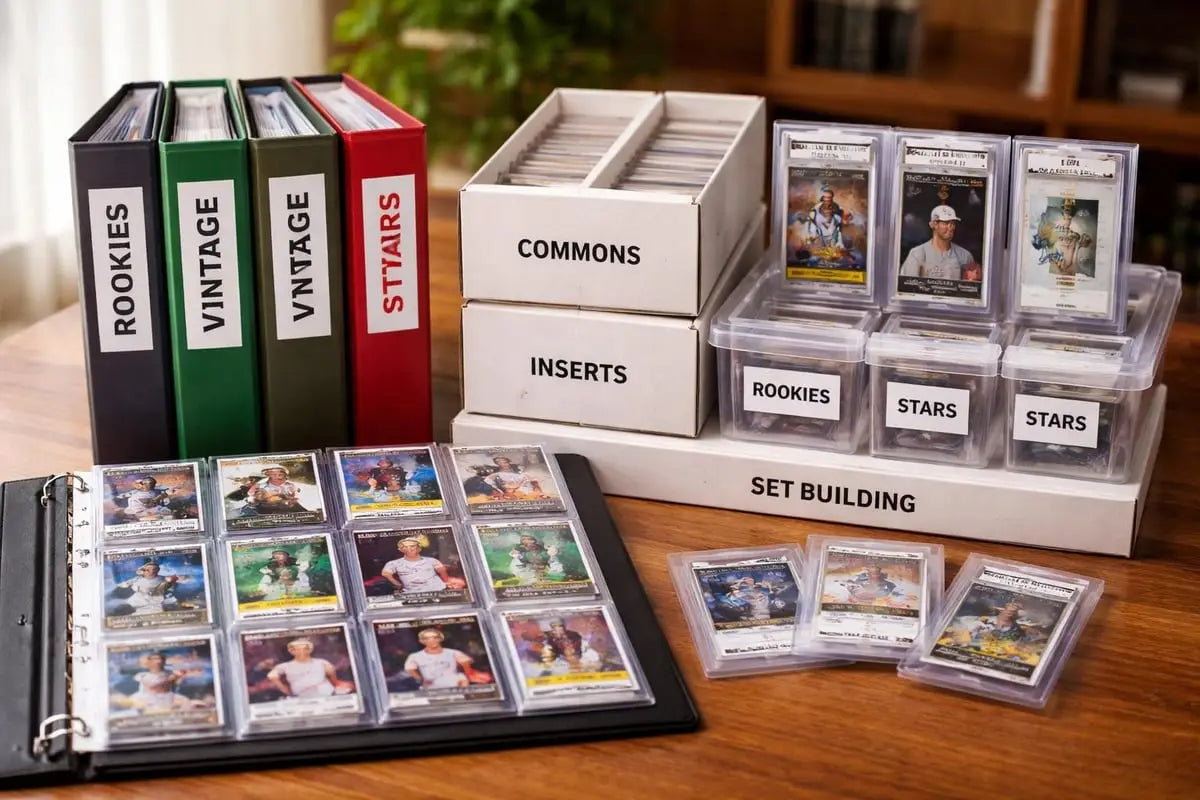
This tiered approach optimizes both accessibility and protection. Active collection portions remain in binders for easy access, while long-term holdings stay safely stored in climate-controlled boxes.
Rotation and Maintenance Schedules
Implement regular maintenance routines to ensure your baseball card binder system remains effective:
- Quarterly inspections checking for page deterioration or environmental damage
- Annual reorganization purging duplicates and optimizing arrangement
- Environmental monitoring verifying proper temperature and humidity levels
- Page replacement swapping worn pages before they damage cards
- Cleaning protocols removing dust from binder exteriors without disturbing cards
Inspect page seams and pockets regularly. Damaged pockets with tears or separation allow cards to slide out or become scratched. Replace compromised pages immediately to prevent card damage.
Common Mistakes to Avoid
Even experienced collectors sometimes fall into traps that compromise their baseball card binder collections. Understanding these pitfalls helps prevent costly mistakes.
Overstuffing and Improper Loading
The single most common error involves forcing too many cards into pages designed for specific quantities. A 9-pocket page holds exactly nine cards - adding a tenth creates bulging that stresses both pages and cards.
Double-loading pages by inserting two cards per pocket seems efficient but causes multiple problems. Cards rub against each other, creating surface wear. Pages stretch and distort, eventually tearing. The pressure can even cause card bending or edge damage over time.
Using Improper Materials
Not all plastic pages suit long-term card storage. Proper handling and storage materials maintain card value through proper environmental controls and material selection.
PVC-based pages represent a serious threat to card preservation. PVC breaks down over time, releasing chemicals that permanently damage card surfaces, creating clouding or sticky residue. Always verify pages contain polypropylene or other archival-safe materials.
Cheap binders with rough interior surfaces can scratch cards during insertion or removal. Invest in quality binders with smooth interiors and reinforced construction.
Maximizing Display and Enjoyment
A baseball card binder serves dual purposes - protection and presentation. Balancing these functions enhances collecting enjoyment while maintaining preservation standards.
Creating Showcase Pages
Dedicate premium pages to your most impressive cards. Single-pocket or four-pocket pages allow favorite cards to stand out, creating natural focal points when browsing your collection.
Strategic placement matters for visual impact:
- Position star players on right-hand pages for immediate visibility when opening the binder
- Group related cards thematically for storytelling - rookie cards with final-year cards, teammates together, award-winning seasons
- Use blank pages as spacers between major sections
- Consider color coordination within pages for aesthetic appeal
Visual flow through your binder creates narrative and increases engagement. Rather than strict chronological order, consider grouping cards that tell stories about player careers, championship seasons, or memorable moments.
Building Set Completion Tracking
Serious set builders benefit from systematic tracking within their baseball card binder organization. Understanding different storage methods helps collectors make informed decisions about organization approaches.
Create checklists on divider pages marking completed cards versus needed cards. This visual reference makes identifying gaps obvious when opportunities arise to complete sets. Some collectors use different colored tabs to indicate completion status - green for complete sets, yellow for near-complete, red for early-stage building.
Investment-Grade Storage Considerations
Cards held as investments require heightened protection standards. When your baseball card binder contains significant financial value, additional precautions become essential.
Insurance and Documentation
Photograph your collection systematically, capturing both overall binder organization and individual high-value cards. Store digital copies in cloud storage separate from physical storage locations.
Maintain detailed spreadsheets documenting:
- Card description and identification numbers
- Purchase price and date
- Current estimated value
- Condition notes
- Storage location within your system
This documentation proves invaluable for insurance claims, estate planning, or eventual sales. Update valuations annually as market conditions change.
Security Measures
High-value collections justify additional security investments beyond standard storage. Consider fireproof safes for most valuable binders, security systems monitoring storage areas, and separate storage locations for different collection segments to minimize total loss risk.
Climate-controlled storage units provide professional-grade environmental management when home storage can't maintain ideal conditions. Practical tips for proper storage environments prevent damage and preserve collection value over decades.
Special Considerations for Different Card Types
Not all baseball cards fit standard 2.5" × 3.5" dimensions. Your baseball card binder system must accommodate various sizes and formats.
Oversized and Specialty Cards
Larger cards including patches, memorabilia cards, and vintage tobacco cards require specialized pages. Four-pocket or single-pocket pages designed for larger dimensions prevent corner damage and surface stress.
Thick cards containing memorabilia pieces or multiple layers may not fit standard pockets. Ultra-thick holders accommodate these cards while maintaining binder compatibility. Never force thick cards into standard pockets - the pressure damages both card and page.
Autographed cards present special challenges. Some collectors prefer keeping autographs in top loaders within binder pages, providing double protection for these irreplaceable items. This approach prevents signature smudging while maintaining binder organization.
Vintage Card Protection
Pre-1980 cards often feature different card stock, coatings, and dimensions than modern issues. These cards deserve premium page protection and careful handling.
Vintage cards typically show some wear - this is expected and factored into grading. However, additional damage from improper storage significantly impacts value. Use archival-quality pages specifically designed for vintage cards, which accommodate slight size variations and provide extra surface protection.
Consider sleeving valuable vintage cards individually before binder insertion. This extra layer guards against page imperfections and provides additional handling protection during removal for examination or grading submission.
Building Long-Term Collection Value
Strategic baseball card binder management supports collection appreciation over time. Proper organization, protection, and documentation create conditions for maximizing value growth.
Condition Preservation Strategies
Card condition determines value more than any other single factor. A card's journey from pack to binder to potential sale requires consistent protection standards.
Minimize handling frequency for high-value cards. Each time you remove and reinsert a card, you risk accidental damage. Browse your collection in the binder without removing cards unless necessary.
Temperature fluctuations cause cardboard expansion and contraction, eventually leading to warping. Maintain stable storage conditions year-round, avoiding seasonal temperature swings that compromise card flatness.
Market Awareness and Collection Curation
Understanding market trends helps you allocate protection resources effectively. Track which players and sets gain value, ensuring those cards receive premium protection in your baseball card binder system.
Regularly review your collection composition. Remove damaged or low-value cards that occupy premium binder space. These cards can move to budget storage boxes, freeing binder space for cards deserving better protection and display prominence.
Proper baseball card binder selection and management fundamentally impacts your collection's long-term value, accessibility, and enjoyment. By implementing archival-quality materials, organized systems, and consistent environmental controls, you create conditions that preserve and showcase your investment for decades. Whether you're building complete sets, collecting favorite players, or investing in valuable rookies, TradingCardsMarketplace offers the cards and expertise to support your collecting journey with quality inventory and trusted service for collectors at every level.