

The 1986 Fleer basketball box represents one of the most significant investments in the sports card collecting hobby. This sealed product contains 36 packs of cards from what many consider the single most important basketball card set ever produced. With the legendary Michael Jordan rookie card anchoring the set, along with other Hall of Fame players, sealed boxes have become increasingly rare and valuable. Collectors and investors worldwide recognize this product as a cornerstone of any serious basketball card collection, driving unprecedented demand in the marketplace.
Understanding the Historical Significance
The 1986-87 Fleer basketball set marked a pivotal moment in the sports card industry. Before this release, basketball cards had minimal presence in the market, with Topps abandoning the category years earlier. Fleer's decision to produce this set created the foundation for modern basketball card collecting.
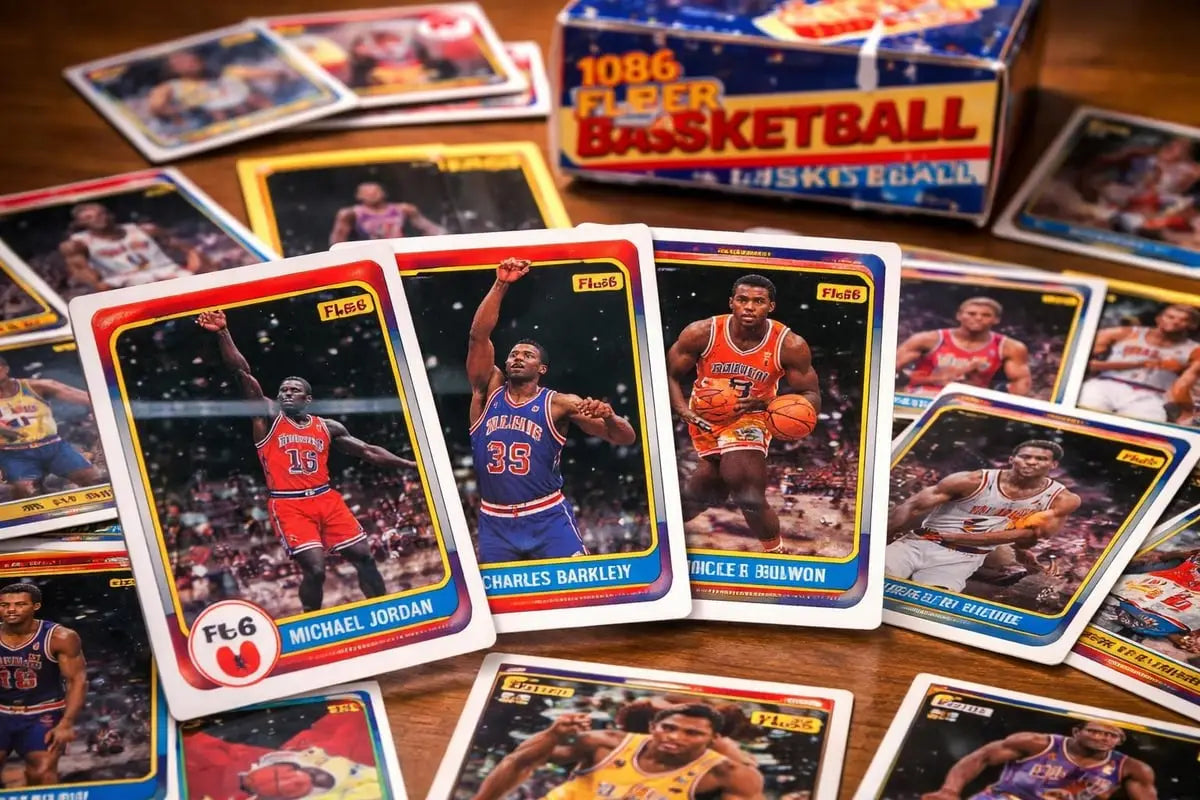
This 132-card set captured an extraordinary moment in NBA history. The 1986 Fleer basketball box contained cards featuring multiple future Hall of Famers in their rookie years, including Michael Jordan, Charles Barkley, Hakeem Olajuem, and Patrick Ewing. The timing proved perfect, as these players would dominate the league throughout the late 1980s and 1990s.
The Jordan Effect on Box Values
Michael Jordan's impact on the value of sealed 1986 Fleer basketball boxes cannot be overstated. His rookie card, #57, has become the most valuable modern sports card in existence. Sports Illustrated's analysis of top 1986-87 Fleer cards confirms the extraordinary premium his presence creates for sealed products.
Every unopened box contains the possibility of finding this iconic card, creating a lottery-like appeal for collectors. This potential drives values far beyond the simple calculation of individual card prices. The thrill of opening packs from this era adds emotional value that authenticated, sealed boxes preserve.
Authentication and Condition Factors
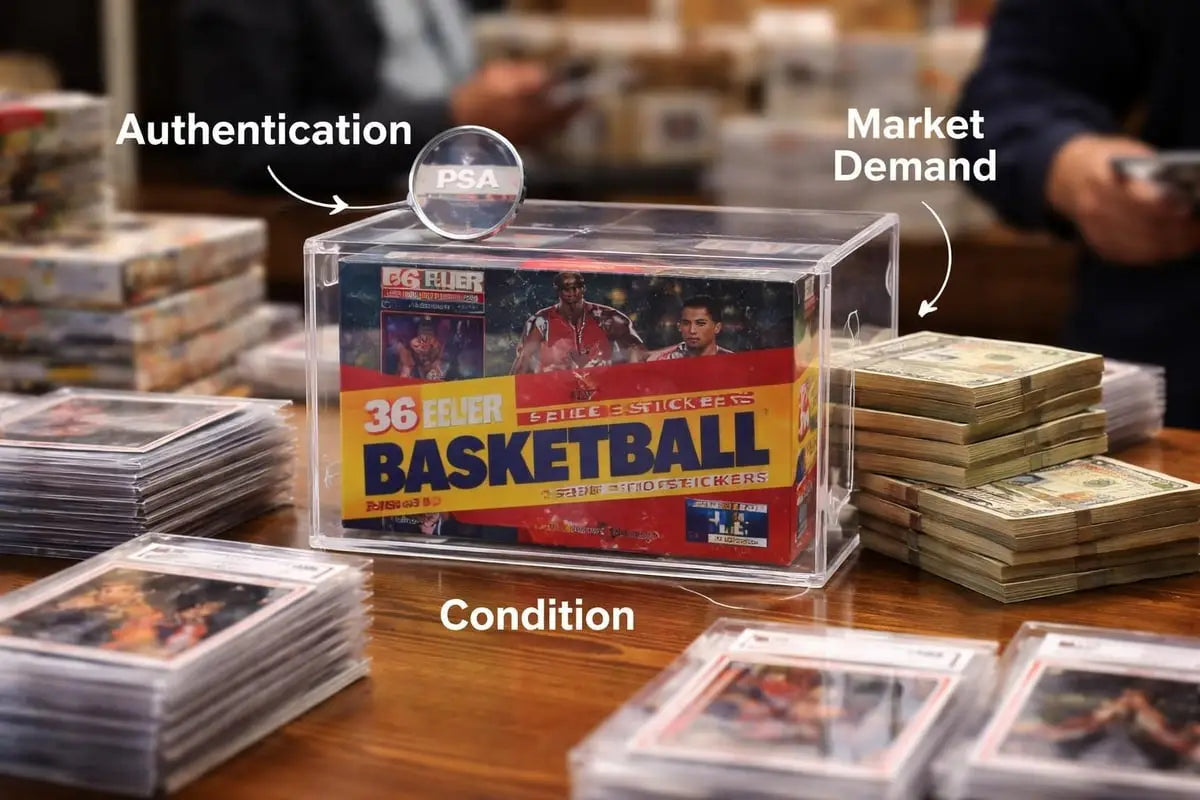
Purchasing a 1986 Fleer basketball box requires careful attention to authentication. The high values these boxes command have unfortunately led to counterfeiting and resealing attempts in the secondary market.
Key authentication services include:
- Baseball Card Exchange (BBCE) - Industry gold standard
- Professional Sports Authenticator (PSA)
- Beckett Grading Services (BGS)
BBCE authentication has become particularly important for vintage wax boxes. Auction records for BBCE-authenticated boxes demonstrate the premium buyers place on verified products. An authenticated box provides confidence that the product hasn't been searched or tampered with over the past four decades.
Wax Box vs. Cello Box vs. Rack Pack
The 1986 Fleer basketball box came in several different configurations, each with distinct characteristics and values.
| Product Type | Packs Per Box | Cards Per Pack | Visibility | Relative Value |
|---|---|---|---|---|
| Wax Box | 36 | 12 | No visibility | Highest |
| Cello Box | 24 | 27 | Full visibility | High |
| Rack Pack Box | 24 | 45 | Partial visibility | Moderate |
Wax boxes command the highest premiums because the opaque packaging means the contents remain completely unknown. Cello boxes, with their cellophane wrapping, allow visibility of the top and bottom cards, which means some boxes have been cherry-picked if they showed premium cards. Rack packs offer partial visibility but are less common in the marketplace.
Current Market Values and Trends
The 1986 Fleer basketball box market has experienced explosive growth over the past decade. Values that seemed astronomical five years ago now appear modest compared to recent sales figures.
Authenticated wax boxes regularly sell for six figures at major auctions. The exact price depends on several factors including authentication service, condition of the wrapper, and overall market sentiment at the time of sale. Market fluctuations occur, but the long-term trajectory has been consistently upward.
Price Determinants
Several specific factors influence what any particular box might sell for:
- Authentication source and wrap quality
- Market timing and economic conditions
- Auction house or private sale venue
- Buyer competition and bidding dynamics
- Media attention and pop culture moments
The visibility of Michael Jordan through documentaries like "The Last Dance" created renewed interest in his rookie card and sealed products. Such cultural moments can trigger price spikes as new collectors enter the market seeking investment-grade collectibles.
Just Collect's comprehensive overview of the 1986 Fleer set provides valuable context about how individual card values contribute to box pricing. When multiple cards from a set command four-figure or five-figure prices, the sealed product containing them naturally appreciates.
Investment Considerations
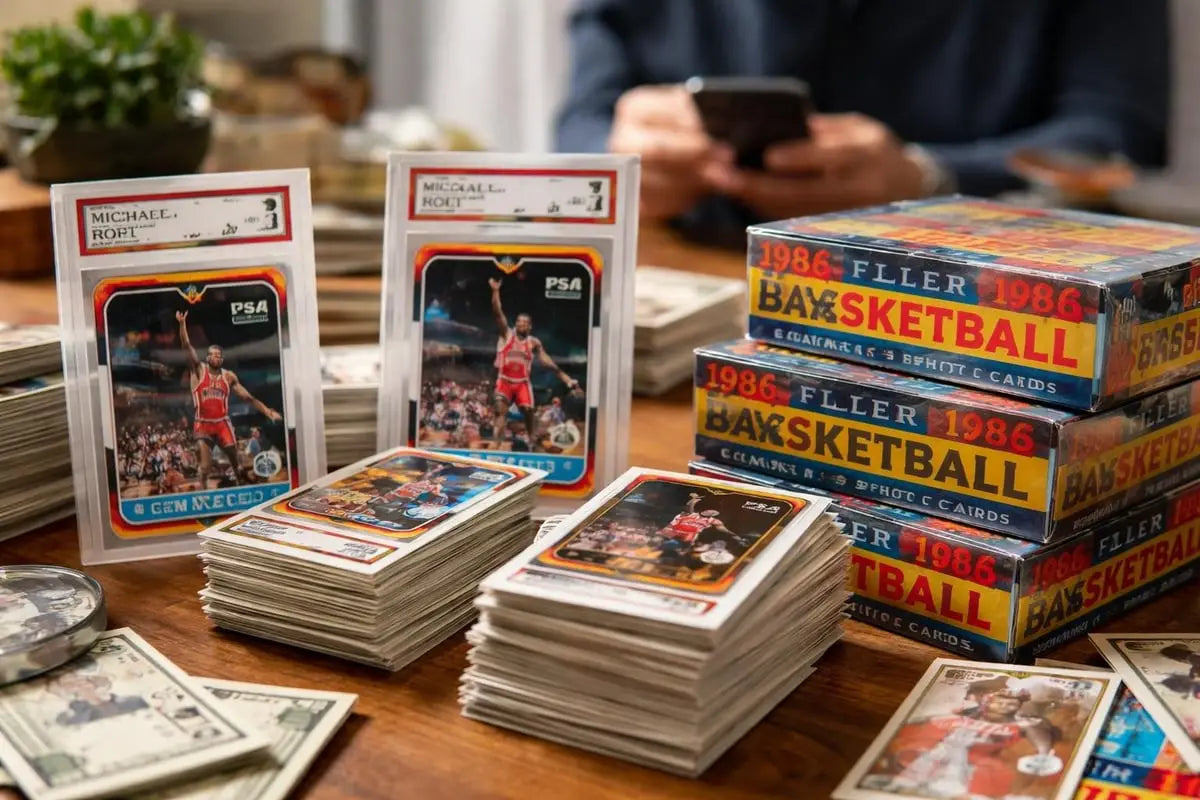
Treating a 1986 Fleer basketball box as an investment requires understanding both the opportunities and risks involved. Like any collectible investment, past performance doesn't guarantee future results, though the historical data appears compelling.
Investment advantages include:
- Scarcity increases over time as boxes are opened
- Authenticated products provide verifiable provenance
- Strong collector base ensures liquidity
- Multiple Hall of Fame rookies provide diversification within one product
- Cultural significance of the Jordan rookie card
Risk factors to consider:
- High entry cost limits accessibility
- Market volatility can create short-term price swings
- Authentication costs add to total investment
- Storage and insurance requirements
- Potential for market corrections
Diversification principles apply to sports cards just as they do to traditional investments. A 1986 Fleer basketball box represents a significant allocation that should fit within a broader collecting or investment strategy.
Comparison to Other Vintage Products
Understanding where this product fits in the broader vintage card market helps contextualize its value proposition.
| Product | Era | Key Rookie | Approximate Box Value Range |
|---|---|---|---|
| 1986 Fleer Basketball | 1986 | Michael Jordan | $150,000-$300,000+ |
| 1952 Topps Baseball | 1952 | Mickey Mantle | $200,000-$400,000+ |
| 1979 O-Pee-Chee Hockey | 1979 | Wayne Gretzky | $50,000-$100,000 |
| 1989 Upper Deck Baseball | 1989 | Ken Griffey Jr. | $8,000-$15,000 |
The 1986 Fleer basketball box holds its position among the most valuable sealed products in the hobby. Only the 1952 Topps baseball box consistently commands higher prices, and that product is 34 years older.
Lesser-Known Value Cards in the Set
While Michael Jordan dominates discussions about the 1986 Fleer basketball box, several lesser-known cards have achieved remarkable values. This depth of value throughout the set enhances the appeal of sealed boxes.
Star Power Beyond Jordan
Charles Barkley's rookie card (#7) has climbed steadily in value as collectors recognize his impact on the game. Hakeem Olajuwon (#82) and Patrick Ewing (#32) also command strong prices in high grades. These Hall of Famers provide substantial value even in packs that don't contain the Jordan rookie.
Clyde Drexler, Karl Malone, and Isiah Thomas rookies add further depth. A single box containing 36 packs offers 432 total cards, creating multiple opportunities to find significant value. This mathematical reality supports the premium pricing of sealed boxes.
The sticker variations also add collecting complexity and value. The set included 11 stickers inserted randomly in packs, with the Jordan sticker being particularly desirable. Collectors pursuing complete sets need both the base cards and stickers, driving demand for sealed product.
Buying Strategies for Collectors
Acquiring a 1986 Fleer basketball box requires careful planning and execution. The substantial financial commitment deserves thorough research and strategic timing.
Where to buy:
- Major auction houses (Heritage, Goldin, PWCC)
- Specialized sports card dealers
- Private sales through collector networks
- High-end card shows and conventions
Each purchasing venue offers distinct advantages. Auction houses provide authentication guarantees and competitive pricing through bidding, but buyer's premiums add costs. Private sales may offer better prices but require more due diligence regarding authentication.
Timing Your Purchase
Market timing plays a significant role in optimizing your investment. Prices fluctuate based on several external factors:
- Major sports events (NBA Finals, All-Star Games)
- Jordan-related news (anniversaries, documentaries)
- Economic conditions (inflation, stock market performance)
- Hobby trends (grading backlogs, new collectors entering)
Monitoring these factors helps identify optimal buying opportunities. Patient collectors who track sales data and market trends often secure better pricing than impulsive buyers chasing headlines.
Storage and Preservation
Protecting your investment requires proper storage techniques. A 1986 Fleer basketball box represents decades-old cardboard and wax that deteriorates without appropriate care.
Essential storage guidelines:
- Climate-controlled environment (65-70°F, 30-50% humidity)
- Avoid direct sunlight and fluorescent lighting
- Store flat, never on edge
- Use acid-free boxes or sleeves for additional protection
- Maintain insurance coverage with documented authentication
Temperature and humidity fluctuations cause the most damage to vintage wax boxes. The wax coating can melt in excessive heat or become brittle in cold conditions. Humidity promotes mold growth and wrapper deterioration.
Professional storage facilities specializing in collectibles offer solutions for collectors without suitable home storage. The annual cost of professional storage represents sound insurance against environmental damage that could devastate your investment.
The Breaking Phenomenon
Modern collectors have embraced "breaking" as a way to access vintage sealed products without purchasing entire boxes. Professional breakers purchase sealed boxes and sell individual packs or randomized spots to participants.
This trend has made the 1986 Fleer basketball box more accessible to average collectors. Instead of investing six figures in a complete box, collectors can purchase a single pack or a randomized team selection for hundreds or thousands of dollars.
Breaking serves multiple market functions. It provides liquidity for sealed boxes, creates entertainment content for the hobby, and allows broader participation in premium products. However, it also permanently removes sealed boxes from the market, increasing scarcity for future collectors.
Impact on Long-Term Values
The breaking phenomenon creates interesting market dynamics. Each box opened reduces the total population of sealed products, theoretically increasing values for remaining boxes. Simultaneously, breaking generates pack-fresh graded cards that compete with sealed boxes for collector dollars.
Collectors interested in vintage products should explore various options available through specialized trading card marketplaces that offer both sealed products and individual cards to suit different collecting strategies and budgets.
The 1986 Fleer basketball box remains an iconic collectible that combines historical significance, investment potential, and the excitement of vintage pack opening. Whether you're building a world-class collection or diversifying your investment portfolio, understanding authentication, market dynamics, and preservation techniques ensures you make informed decisions. TradingCardsMarketplace connects collectors with authenticated vintage products and modern releases, helping you build the collection that matches your passion and budget.


